Industry solution · Painting & decorating
Van racking for painters and decorators
Paints, containers and delicate surfaces: in a painter's vehicle the racking decides whether the load space still looks presentable a year later.
High edge
trays keep containers upright — spills stay contained
Washable
coated floors make cleaning simple
1 source
racking and vehicle signwriting from one company
From everyday work
Typical challenges
Leaking containers
Tipped-over buckets and cartridges ruin the load space and the material.
Bulky equipment
Ladders, telescopic poles and covering material need fixed positions.
Cleanliness
Tools have to stay clean and dry — separated from wet equipment.
Proven in Painting & decorating
Our recommendation
Trays with high edges and non-slip floors keep containers upright and spills under control. Cartridge and spray can inserts sort consumables, the ladder holder on the roof rack frees up space in the load area. Washable floor panels make cleaning simple.
Discuss the recommendation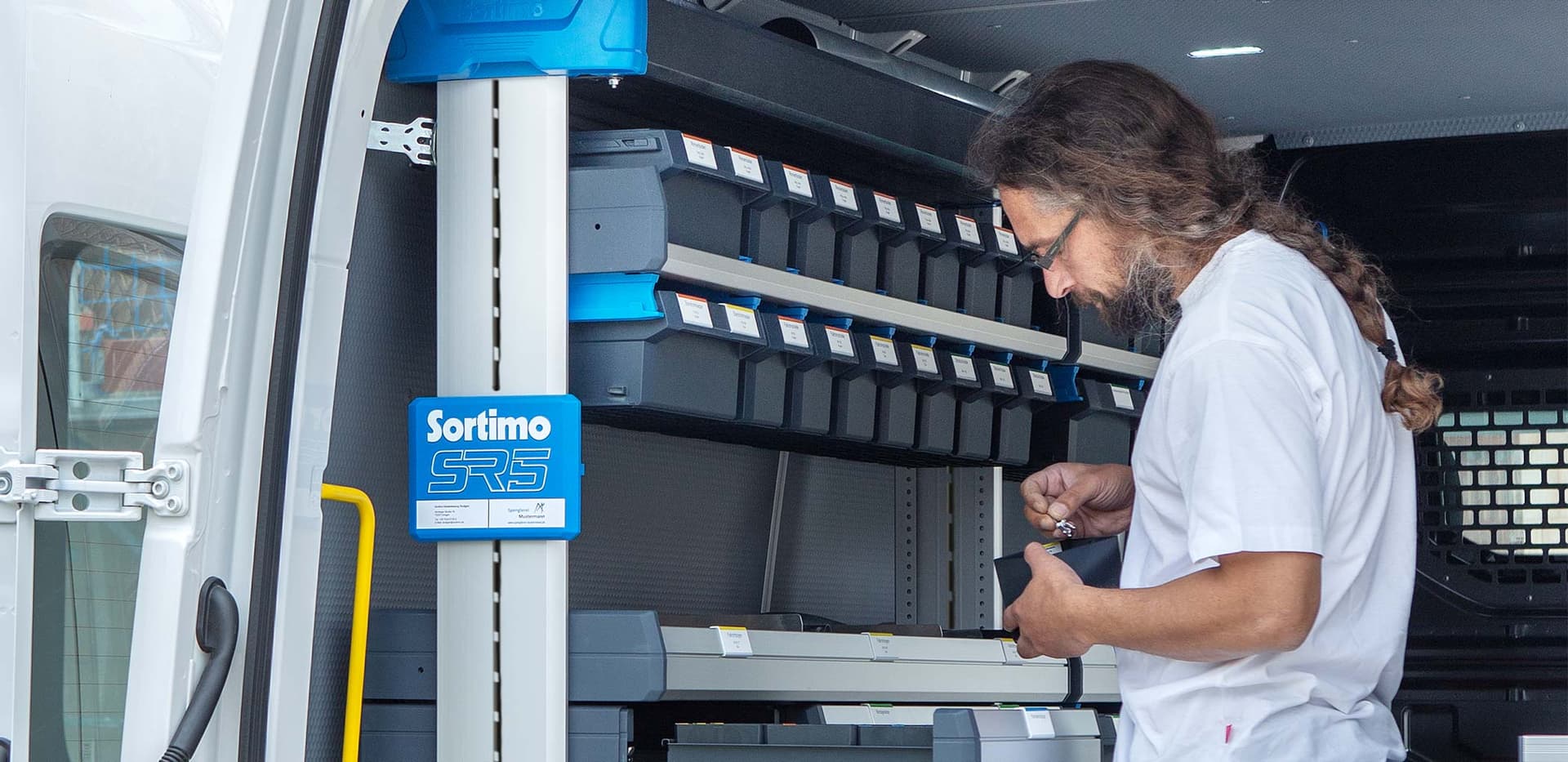
How it can look
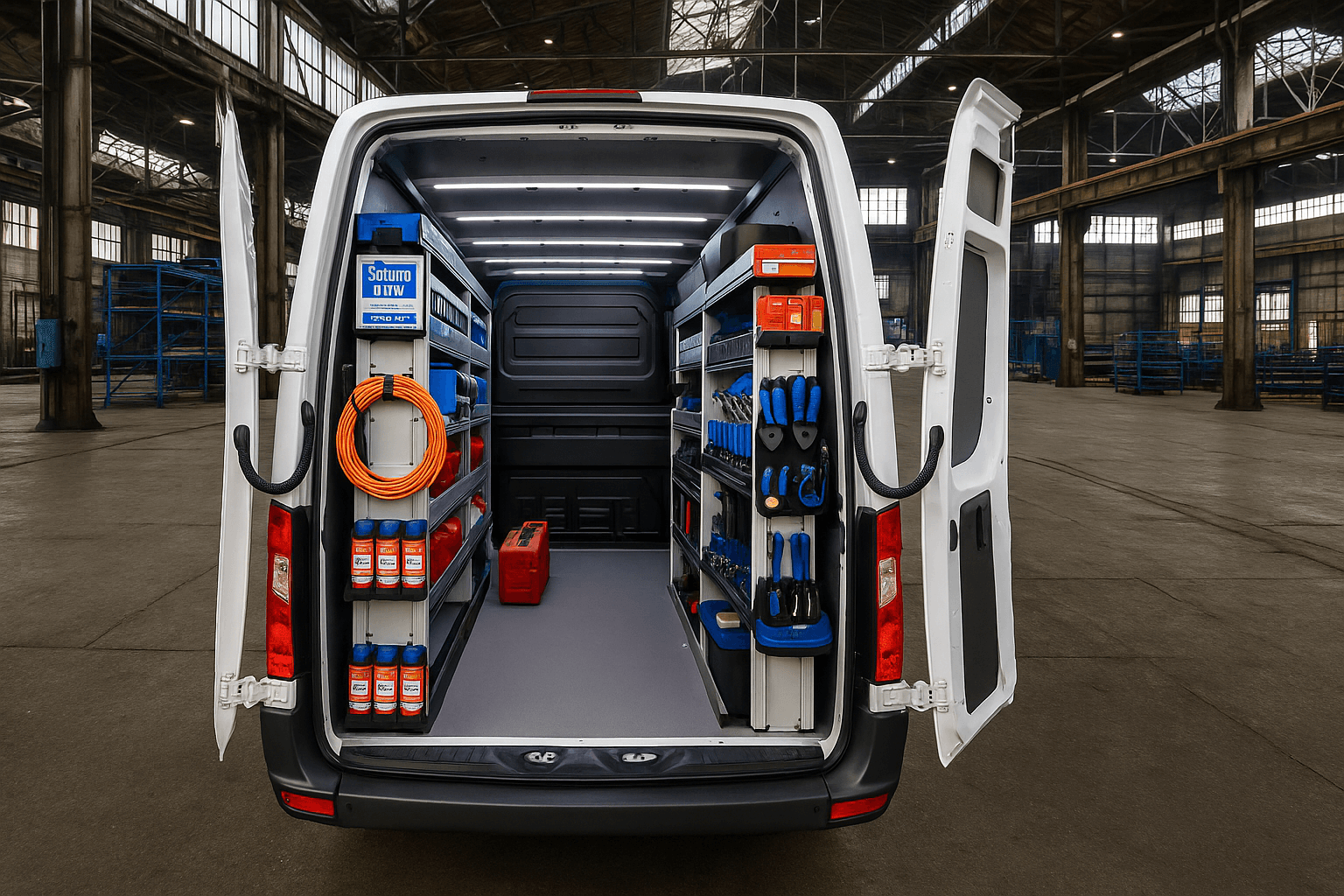
Typical build: panel van for a painting company
Floor zone
Deep trays with non-slip inserts for buckets and containers — upright and spill-proof.
Shelf zone
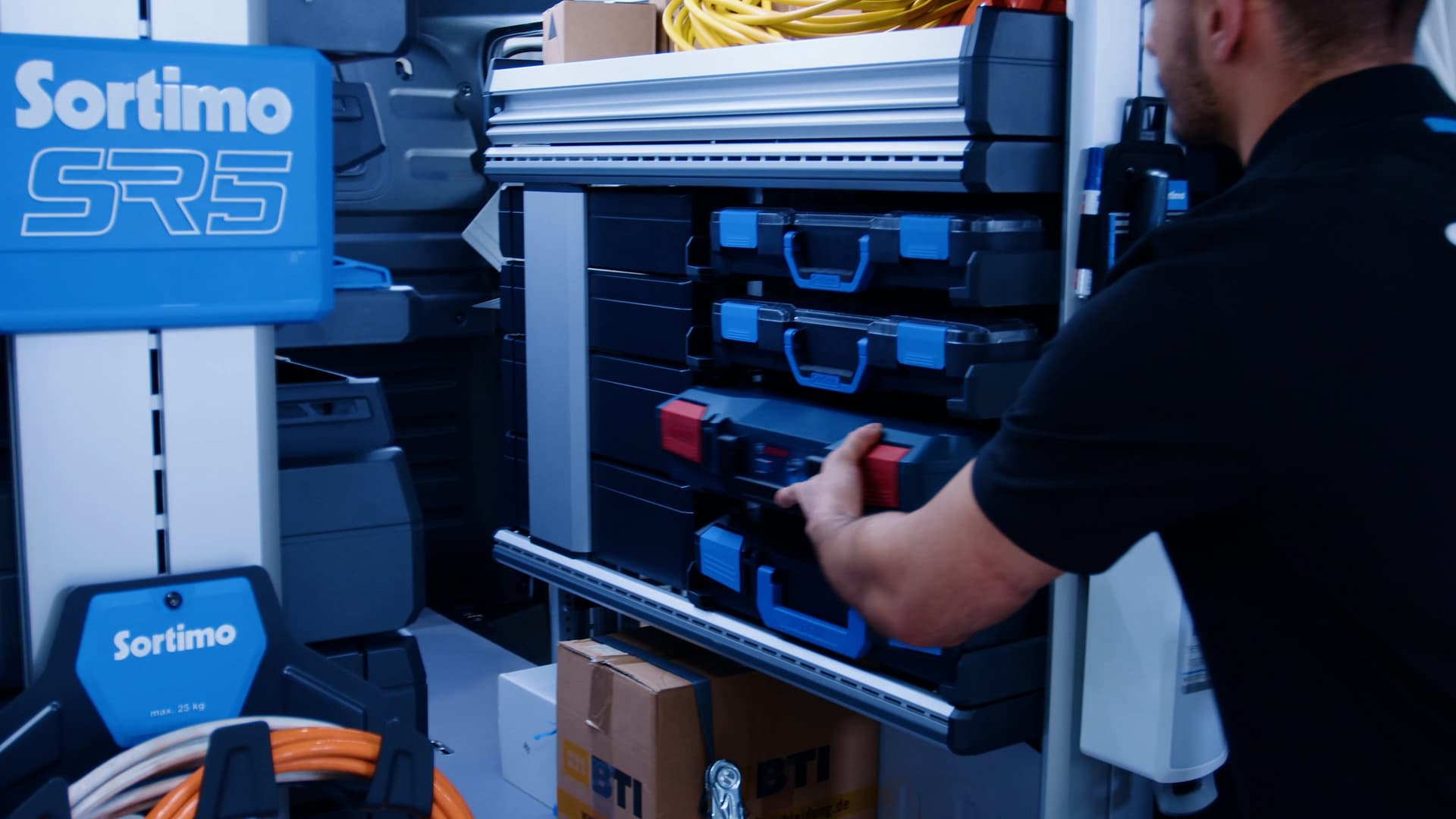
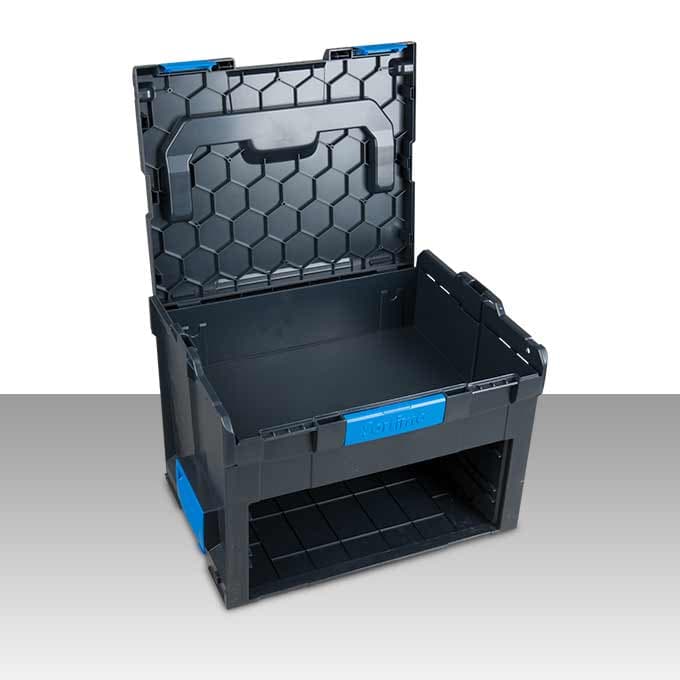
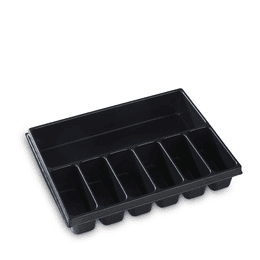
Cartridge and spray can inserts, i-BOXXes for small material, shelves for covering material.
Roof
TopSystem roof rack with ladder holder — ladders and telescopic poles out of the load space.
Floor & securing
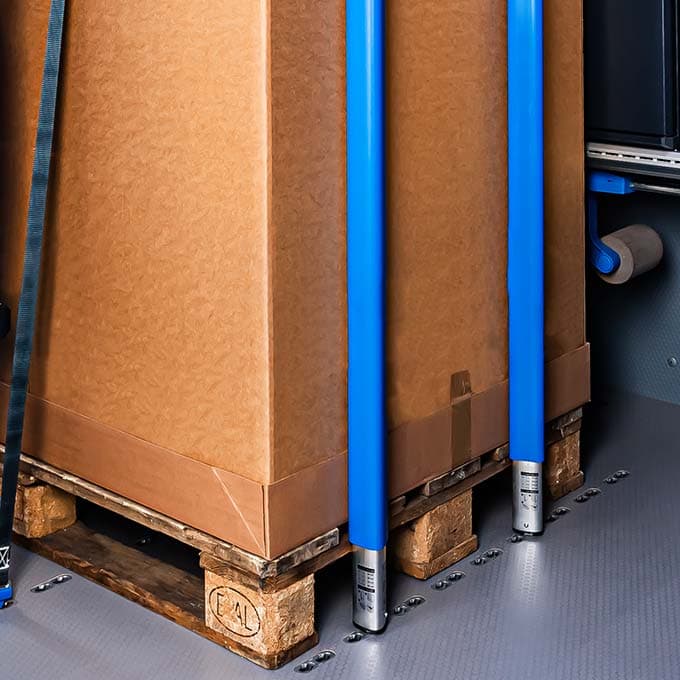
Washable floor panel with lashing rails for everything bulky.
Painting companies from across Essen and the surrounding area have their vehicles fitted out by us — often complete with signwriting from a single source.
By company size
Which setup suits your business?
One-man business
For renovation and smaller painting jobs, a panel van with a container tray low down, a narrow shelf for small material and a roof rack for ladder and telescopic poles is enough. What is decisive is keeping the wet and clean areas strictly separate — otherwise everything is smeared with paint within a few months.
Small company, 2 to 10 vehicles
A typical setup is one material vehicle with a large container zone plus several crew vehicles with basic equipment. If all vehicles have the same compartment division, material can be transferred between sites without anyone having to search. Labelling the compartments matters more than how many there are.
Fleet of ten vehicles or more
In larger painting companies and property maintenance businesses, a uniform basic build plus defined add-on modules for special work such as airless spraying, drywall or façade work pays off. We document the standard and build new vehicles to match — including signwriting, which we produce in the same building.
Tools & material
What goes where
| Item | Where it goes |
|---|---|
| Paint buckets and large containers | Deep trays with a high edge and a non-slip insert, low down and set in form-fit. Opened containers get a tray of their own. |
| Covering film and painter's fleece | Shelves above the container zone, rolls lying in holders. Consumables stay dry and do not get mixed up with paint. |
| Telescopic poles and extensions | Roof rack or a tube holder on the load space ceiling. Lying in the load area they are the most common cause of trips and damage. |
| Ladders and step ladders | TopSystem roof rack with ladder holder and ladder lift, so one person can load and unload alone — without damaging the roof. |
| Cartridges, spray cans, silicone | Inserts that take each can individually. Nothing rolls around the load space and valves and nozzles stay undamaged. |
| Airless unit with hose and nozzles | Low down in a tray or on a rolling platform with lashing points. Hoses and nozzles are stored separately and clean in a drawer. |
| Rollers, brushes, sash tools — coming back wet | A dedicated open area that can be wiped out, away from the closed compartments. Wet tools in clean shelving are the start of a dirty load space. |
| Sander with extraction | A closed BOXX with an insert, the extractor in a secured place. Filter bags and hoses get their own compartments. |
| Filler, jointing compound, drywall material | Heavy-duty tray low down, bags upright and secured against tipping. Weight belongs low and as far as possible between the axles. |
| Paint mixer, scales, colour fans | A shallow drawer in the clean area, colour fans upright in their own compartment. Dry and low-dust, so the colour cards stay readable. |
From practice
Typical planning mistakes
Transporting containers without a tray edge
A bucket standing on an open shelf tips over at the first roundabout. Trays with a high edge and a non-slip insert keep the containers upright and any spill inside the compartment — the most expensive build is worthless if the load space is dyed.
Mixing wet and clean tools
Without a dedicated, wipeable zone for wet rollers and brushes, paint spreads through the whole vehicle. Two separate areas cost little planning and keep the load space presentable for years.
Transporting ladders inside the load space
A ladder in the load area blocks space, damages containers and is a considerable risk under emergency braking. On the roof rack with a ladder lift it is stowed more safely and available faster.
Underestimating the weight of paint
Paint, filler and primer are heavy. Planning a generous container zone without calculating the payload quickly takes you over the permissible gross weight when fully loaded.
Vehicle choice
Suitable vehicles for this trade
High-roof crew van
Typical models
VW Caddy Cargo, Citroën Berlingo, Renault Kangoo
Suitability
Suitable for smaller renovation jobs: container tray, narrow shelf, roof rack. Too tight for large containers, scaffolding parts and airless equipment.
Medium panel van
Typical models
VW Transporter, Ford Transit Custom, Renault Trafic, Opel Vivaro
Suitability
A solid basis for a classic painting company. Container zone low down, shelves for fleece and film, roof rack for ladders — a good balance of storage and manoeuvrability.
Large panel van
Typical models
Mercedes Sprinter, VW Crafter, Fiat Ducato, Ford Transit
Suitability
The choice for façade and property work. Standing height makes working in the load space easier, and the payload carries filler and airless equipment without becoming borderline.
Panel van with trailer
Typical models
Van with scaffolding or curtain-side trailer
Suitability
Sensible if scaffolding parts regularly have to come along. The vehicle stays orderly and the trailer takes the bulky items — we plan nose weight and axle loads with you.
Further reading
The load space is part of how you present yourself
In hardly any other trade does the customer look into the load space as often as with painting and decorating. Material is loaded and unloaded over hours, often right outside the front door or in the stairwell. A load space full of paint spatters and tipped containers shapes the impression more than any business card.
The racking decides whether the load space still looks that way a year later. Coated, washable floor panels can be wiped rather than scrubbed. Trays with a collecting rim limit every incident to one compartment. Closed drawers keep clean tools clean, even if a bucket leaks next to them.
Many painting companies have us do racking and vehicle signwriting together. There is a practical reason: both happen in the same building, the vehicle is off the road only once, and the appearance inside and out is right on the same day.
Carrying hazardous substances and solvents correctly
Solvent-based lacquers, thinners and cleaners are part of everyday painting work — and they place different demands than emulsion paint. The containers have to be transported upright and secured against tipping, labelled and separated from the other tools. A ventilated area is mandatory; closed, sealed compartments without air exchange are the wrong solution here.
In planning terms that means a clearly delimited area with a collecting rim, as close as possible to the rear door for quick loading and unloading, and not near charging equipment or batteries. We advise on the specific legal classification of the quantities you carry as part of the planning; responsibility for it remains with the company.
Why ladders and poles belong on the roof
Ladders, telescopic poles and scaffolding parts are the bulkiest items in a painter's vehicle. Inside the load space they take up a disproportionate amount of area, damage the container zone during loading and unloading and can hardly be secured form-fit. On a roof rack with suitable holders they are better placed.
The counter-argument is usually the height: anyone working alone is reluctant to lift a double ladder overhead onto the roof. That is exactly what the ladder lift is for — it guides the ladder down under control and raises it again. It reduces the effort considerably and prevents the scratches in the vehicle roof that are almost unavoidable when heaving it up.
Frequently asked questions from Painting & decorating
Advice for Painting & decorating
Tell us about your vehicle and your working day — we will plan the conversion that suits your trade.
Also of interest