Industry solution · Joinery & woodwork
Van racking for joiners and cabinetmakers
Between workshop and installation site: joiners carry valuable workpieces, their machine park and fittings all at the same time — and need a clean workplace once they arrive.
0 scratches
workpieces travel protected and secured form-fit
WorkMo
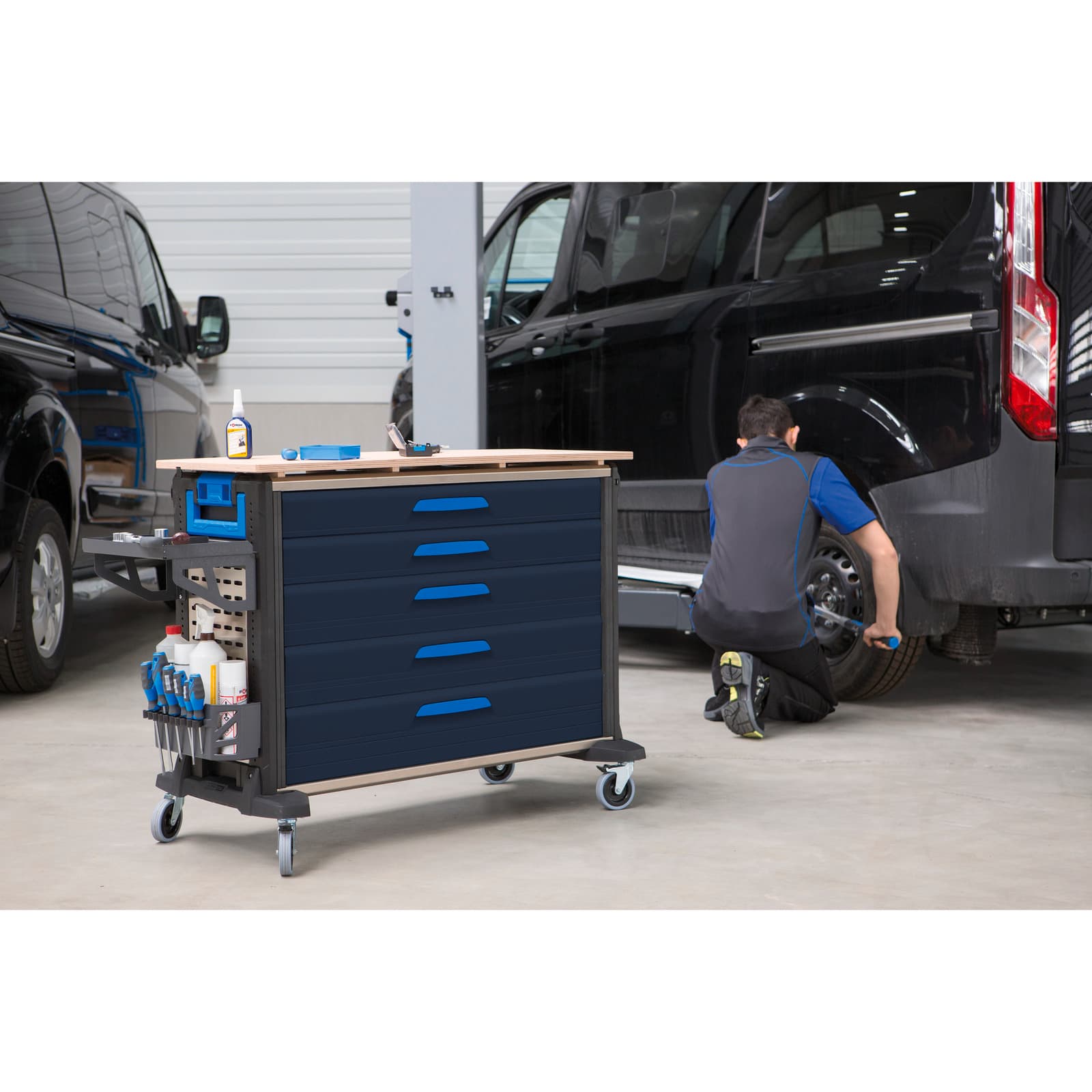
the work bench travels with you — vice included
Flexible
the load space stays free for furniture and fronts
From everyday work
Typical challenges
Protecting workpieces
Fronts and finished parts must not pick up a single scratch in transit.
Machine park
Cordless driver, saw, router, sander — the right selection for each job, safely packed.
Installation workplace
There is no work bench at the customer's site — work often happens kneeling on the floor.
Proven in Joinery & woodwork
Our recommendation
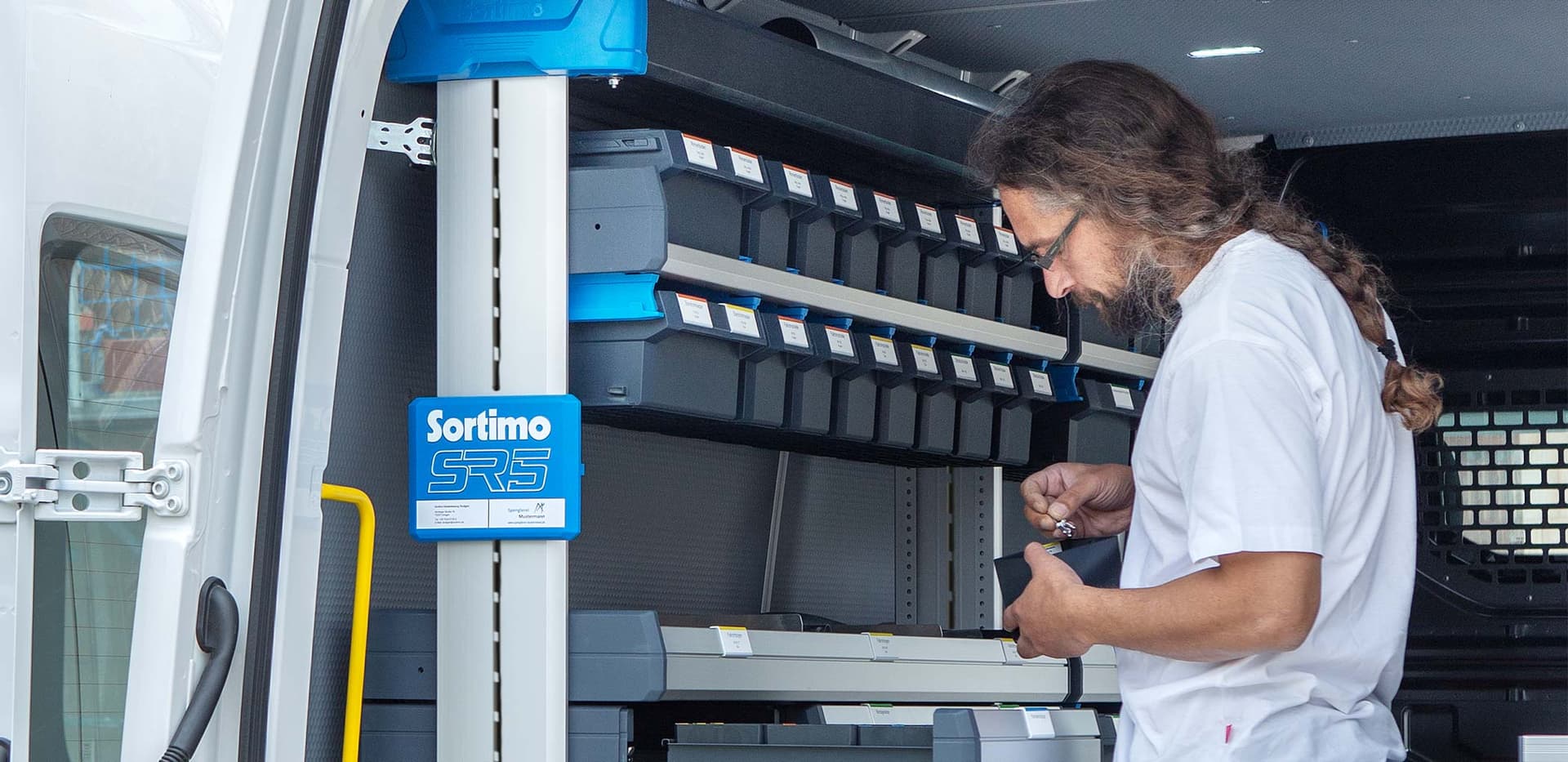
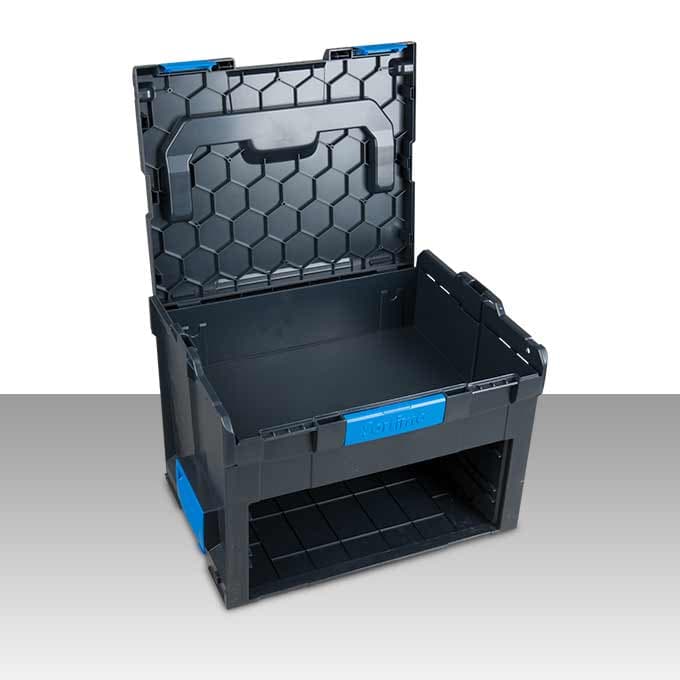
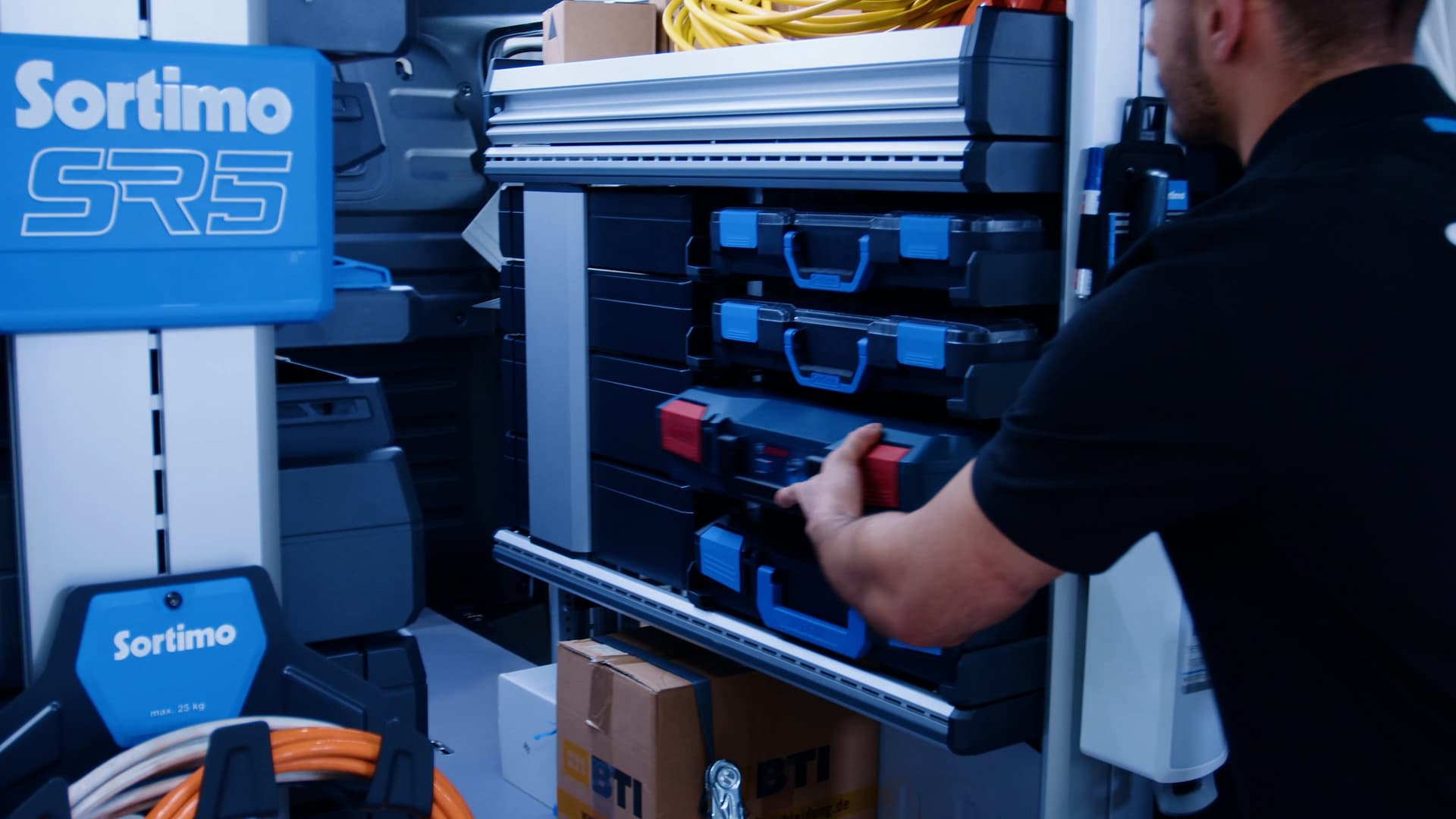
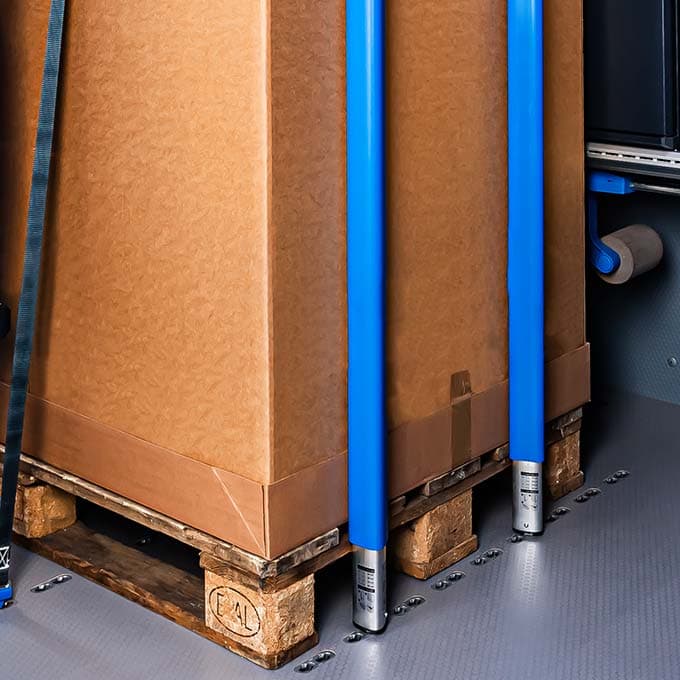
L-BOXXes with machine inserts keep the machine park complete and protected. The WorkMo mobile workstation becomes the work bench at the customer's site — including vice and fittings sorted in i-BOXXes. The rest of the load space stays free for workpieces, secured with lashing rails and tensioning bars.
Discuss the recommendation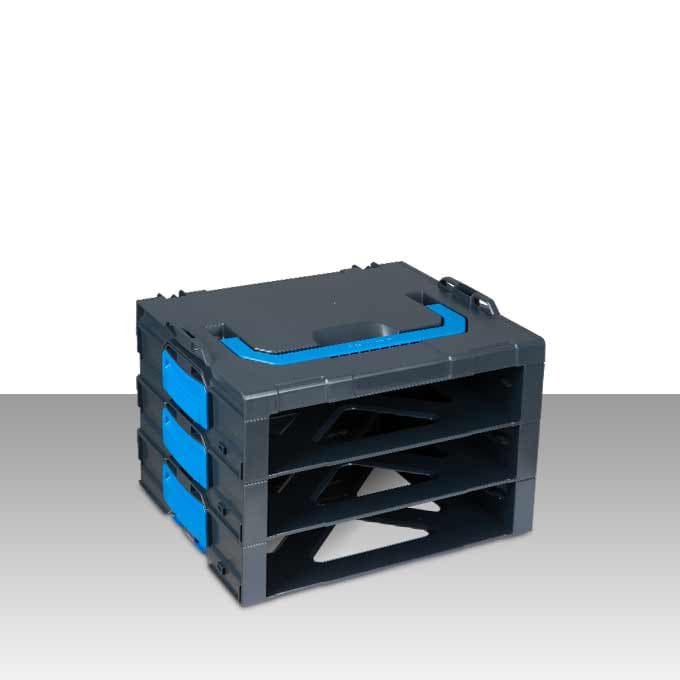
How it can look
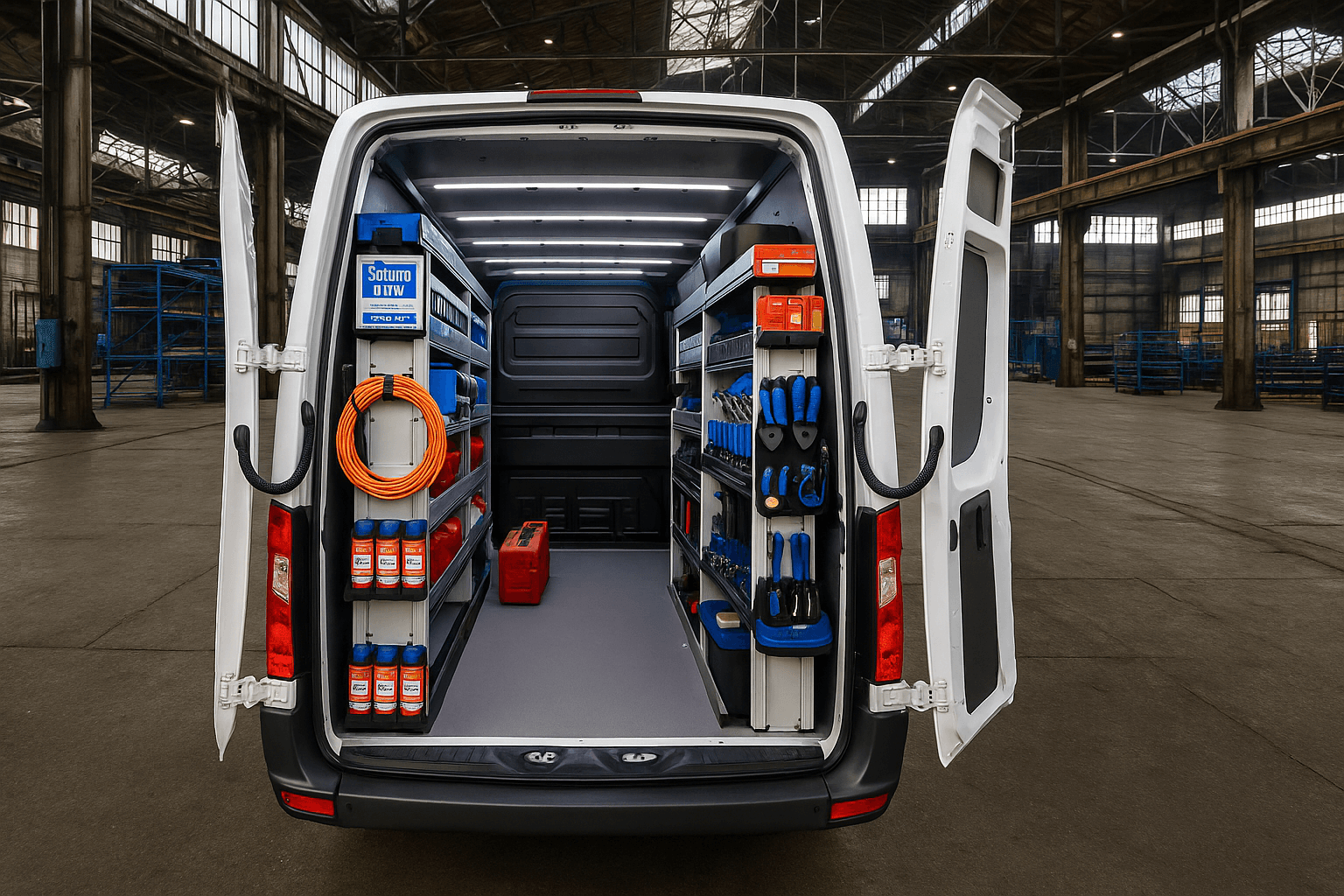
Typical build: panel van for furniture installation
Behind the driver
Compact SR5 shelf for L-BOXXes with machine inserts and i-BOXXes with sorted fittings.
Middle zone
WorkMo with worktop and vice — strapped to lashing rails, set up at the customer's site in minutes.
Open area
Most of the load space stays flexible for workpieces — secured with tensioning bars, blankets and nets.
From exhibition builders to furniture manufacturers: woodworking companies particularly value the WorkMo solutions that come out of our consultation.
By company size
Which setup suits your business?
One-man business
For surveying, repairs and smaller installations, a compact shelf behind the driver plus L-BOXXes with machine inserts is enough. What matters is that the load bed stays usable over its full length — as soon as shelving blocks the diagonal for a door panel, you end up driving twice.
Small company, 2 to 10 vehicles
A split between installation vehicle and service vehicle is common. The installation vehicle stays largely empty and relies on lashing rails, tensioning bars and blankets; the service vehicle gets shelving, a WorkMo and a dense stock of fittings. Both share the same BOXX format, so machines can move between vehicles.
Fleet of ten vehicles or more
In exhibition construction, interior fit-out and larger joinery businesses it is all about repeatability. We define a basic build that every vehicle receives and keep special equipment modular — additional panel supports for kitchen installation, for instance. The fleet stays uniform without every vehicle carrying everything.
Tools & material
What goes where
| Item | Where it goes |
|---|---|
| Sheet material and finished fronts | A lengthwise area kept clear with lashing rails, tensioning bars and edge protection. Panels travel upright, with blankets between them, form-fit against the bulkhead. |
| Router with cutter set | L-BOXX with machine insert, cutters in a shallow i-BOXX with holders. The cutting edges do not touch each other, which noticeably extends their life. |
| Clamps and cramps | A vertical clamp holder on the side wall instead of a stack on the shelf. Clamps are among the noisiest and most damaging travellers in a load space. |
| Plunge saw with guide rail | The saw in the L-BOXX, the rail in its own holder on the wall or under the ceiling. A bent guide rail costs more than any holder. |
| Cordless drivers, drills, charging equipment | Fixed charging brackets with an on-board power connection. Bits and drills in a shallow drawer below, sorted by diameter. |
| Fittings, hinges, connectors | i-BOXXes with Insetboxes, separated by fitting type and size. Transparent lids show missing stock while you are still loading. |
| Screws and fasteners | Assortment cases in i-BOXX format, one compartment per length and diameter. Collection boxes are the biggest time waster here. |
| Mobile dust extractor | A fixed, secured place with a lashing point. Hose and filter bags get their own compartments so they do not disappear inside the extractor. |
| Mitre saw with stand | The saw secured low down, the stand folded up next to it on a wall bracket. Both parts stay together and block no load bed. |
| Glue, lacquers, oils | A tray with a collecting rim, secured upright and separated from the tools. Solvent-based products belong labelled in the ventilated area. |
From practice
Typical planning mistakes
Shelving on both sides
The most expensive mistake in a joinery vehicle: two runs of shelving reduce the usable width so far that standard panels no longer fit in flat. One run of shelving behind the driver and open area for the rest — that division keeps the load bed usable.
Lashing workpieces without edge protection
A strap over a painted edge leaves a pressure mark that cannot be polished out. Edge protection angles and blankets take a few seconds and save the workpiece.
Ignoring dust and shavings
Without a smooth floor panel and closed compartments, fine dust settles in every fitting compartment. After six months, Insetboxes and charging brackets are full of sanding dust, which causes contact problems and dirt on finished parts.
Transporting guide rails loose
A rail lying free in the load space gets wedged between workpieces and distorts. After that the plunge saw no longer cuts cleanly — a fault you only notice at the customer's.
Vehicle choice
Suitable vehicles for this trade
Medium panel van
Typical models
VW Transporter, Ford Transit Custom, Mercedes Vito, Renault Trafic
Suitability
Suitable for surveying, repairs and smaller installations. Standard panels only fit with a long wheelbase and a load-through option — worth checking before buying the vehicle.
Large panel van, long wheelbase
Typical models
Mercedes Sprinter, VW Crafter, Fiat Ducato, Ford Transit
Suitability
The most common choice in joinery. Panel length, standing height and payload all work; a narrow shelf behind the driver leaves the load bed largely intact.
Box body
Typical models
Sprinter box body, Iveco Daily box body, Ford Transit box body
Suitability
First choice for furniture installation and exhibition construction. Rectangular interior without wheelhouses, the full width usable, often with a tail lift for heavy carcasses.
Vehicle and trailer
Typical models
Panel van with curtain-side or box trailer
Suitability
Sensible where job sizes vary. The towing vehicle stays neatly fitted out and the trailer takes the workpieces — we plan the nose weight distribution with you.
Further reading
The conflict of aims: order versus load bed
Joinery vehicles face a contradiction that other trades do not know in this form. On the one hand an extensive machine park travels along and needs order. On the other, carcasses, fronts and panels have to be transported — and they demand clear, level space over the full length and width.
The solution is almost always asymmetric: a compact, deliberately narrow shelf behind the driver for BOXXes and fittings, with open space behind and opposite it. Build on both sides instead and you gain storage but lose the ability to carry a standard panel flat. That comes back to bite you on every kitchen installation.
A workable addition are folding or plug-in panel supports that are only fitted when needed. They hold workpieces securely but disappear when the vehicle is needed to carry tools.
Transporting workpieces without creating rework
Every scratch on a finished front means rework — at worst a new front. Transport is therefore not a side issue but the last production step before handover. It has proven best to transport workpieces upright rather than flat: upright, they can be fixed form-fit between tensioning bars; lying flat, they start to wander and rub with every braking manoeuvre.
Blankets or foam pads belong between the parts, and edge protection angles under every strap at the edges. The effort is a few minutes per journey and therefore far less than the time a single complaint costs.
For sensitive surfaces — high gloss, veneer, oiled solid wood parts — a fixed support area with a non-slip, non-marking insert is worth it as well. Rubber mats are the poorer choice here, because they can leave marks on light surfaces.
The mobile workstation pays off for installation work
Anyone who regularly installs at the customer's site knows the situation: no work bench, no vice, no level surface. Work happens on the floor, on a cardboard box or on the piece of furniture just delivered. That is uncomfortable and produces avoidable damage.
The WorkMo mobile workstation brings worktop, vice and sorted material to the job and is ready in a few minutes. It travels secured to lashing rails and takes up less space in the load area than most people assume. In practice it pays for itself through the time saved and the rework avoided on surfaces that had to serve as a workbench.
Frequently asked questions from Joinery & woodwork
Advice for Joinery & woodwork
Tell us about your vehicle and your working day — we will plan the conversion that suits your trade.
Also of interest