Industry solution · Electrical
Van racking for electricians
Hundreds of small parts, sensitive test equipment and a different site every day: few trades place higher demands on order inside the vehicle than electrical work.
500+
small-part positions in a typical electrical build
i-BOXX
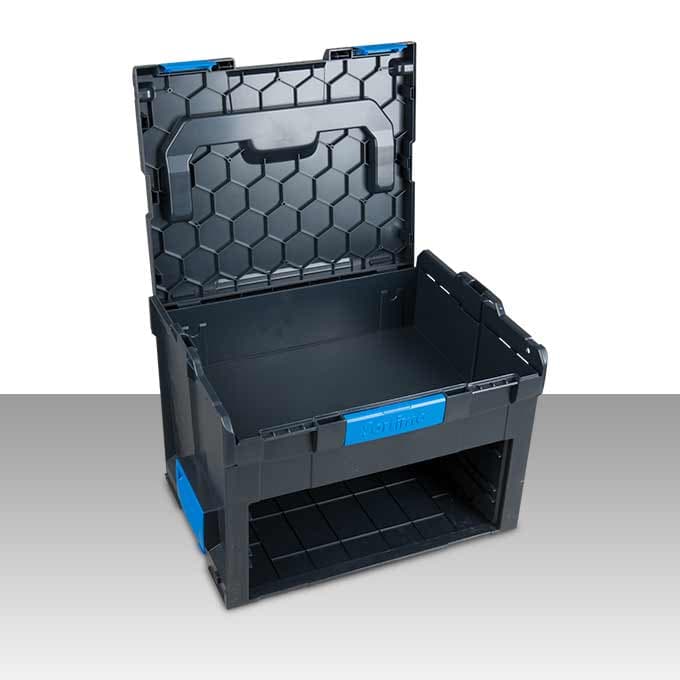
shallow drawers — the standard for installation material
1 reach
to the measuring instrument: padded, fixed, at hand height
From everyday work
Typical challenges
A flood of small parts
Terminals, boxes and switch ranges in countless variants — without a system, every search costs time.
Sensitive test equipment
Testers and measuring instruments need padded, fixed positions instead of loose storage.
Cable & long goods
Cable drums, conduit and trunking need to be stowed safely and reached quickly.
Proven in Electrical
Our recommendation
The combination of an SR5 shelf with shallow i-BOXX drawers for small parts, case mounts for test equipment and a long-goods tray in the roof area has proven itself in hundreds of electrical vehicles. Transparent T-BOXXes make stock levels visible at a glance — you reorder before anything runs out.
Discuss the recommendation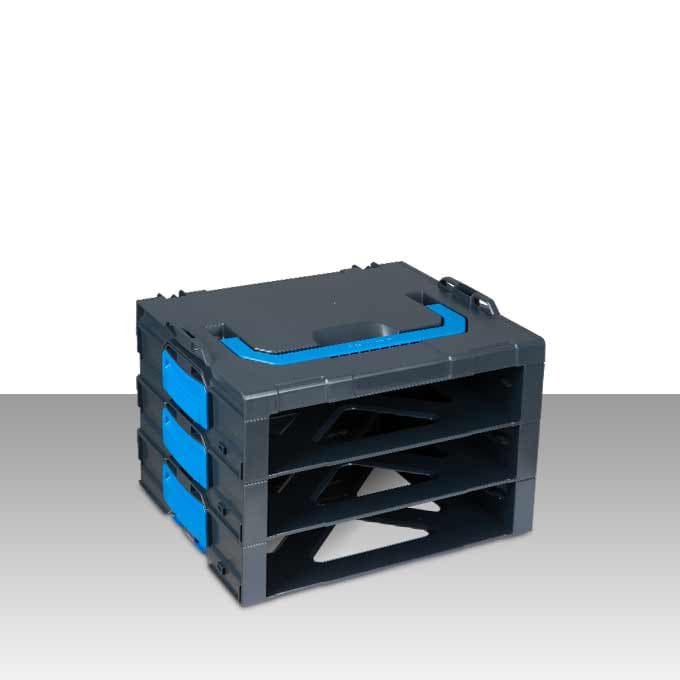

How it can look
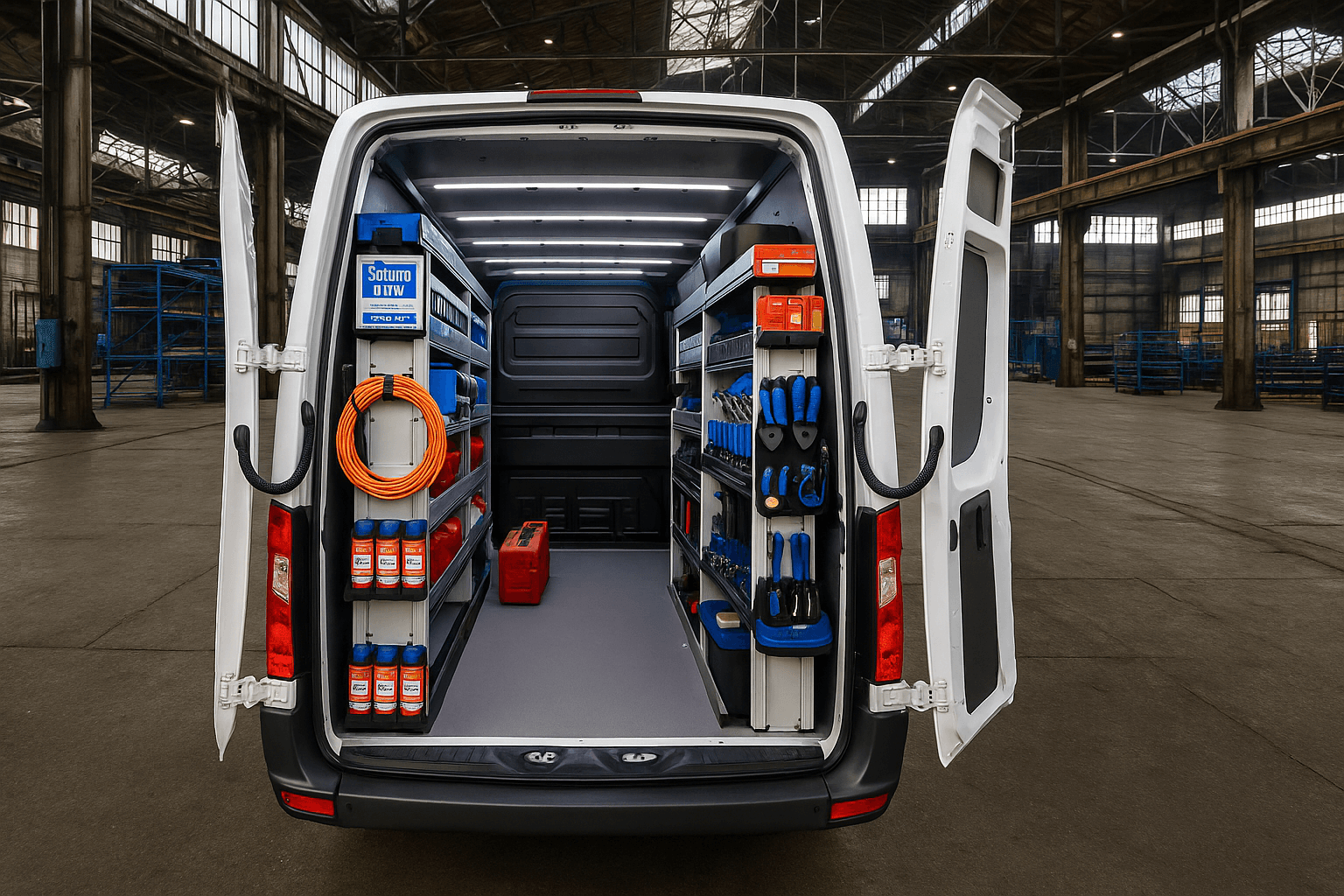
Typical build: panel van for electrical service work
Driver's side
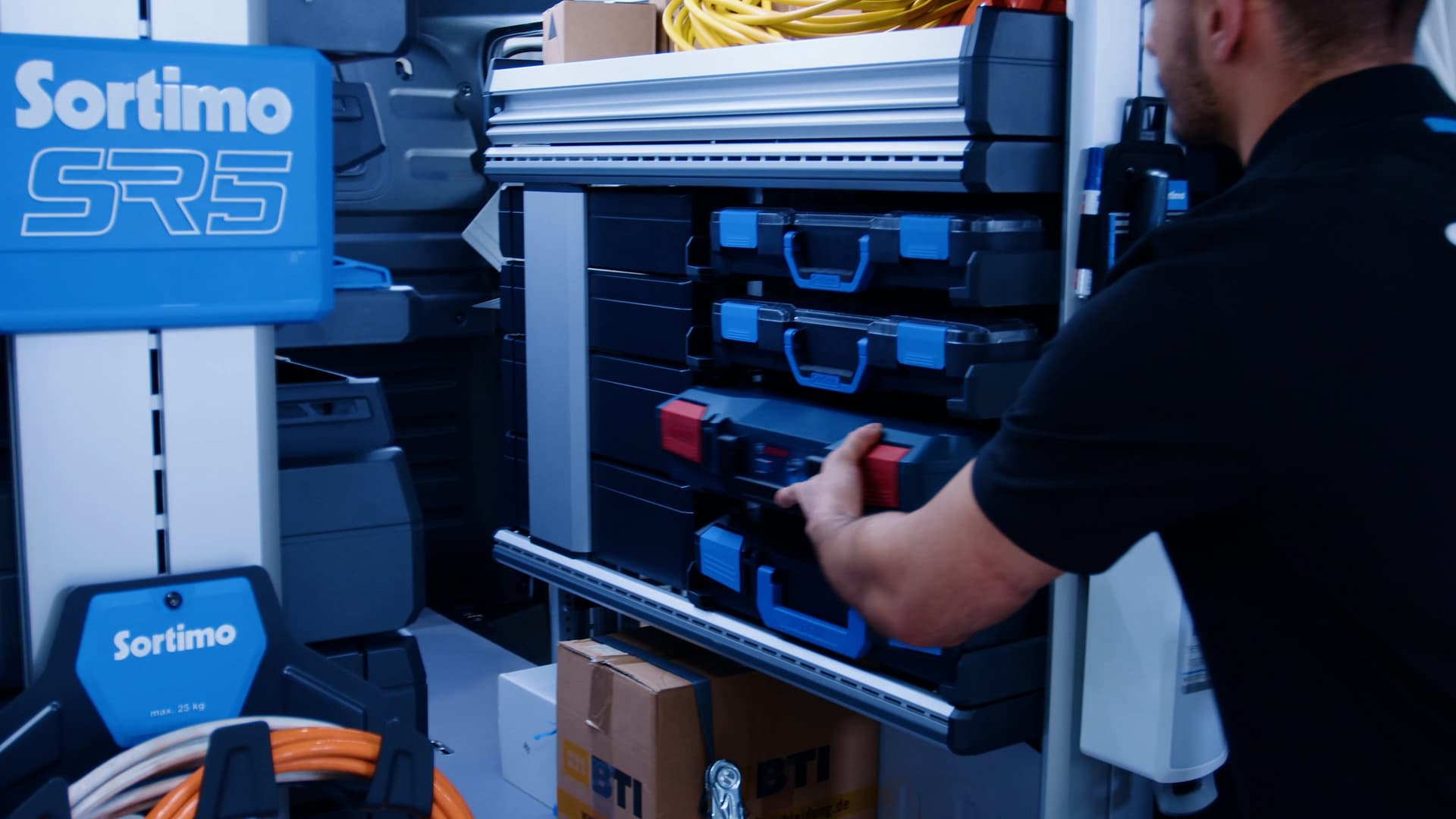
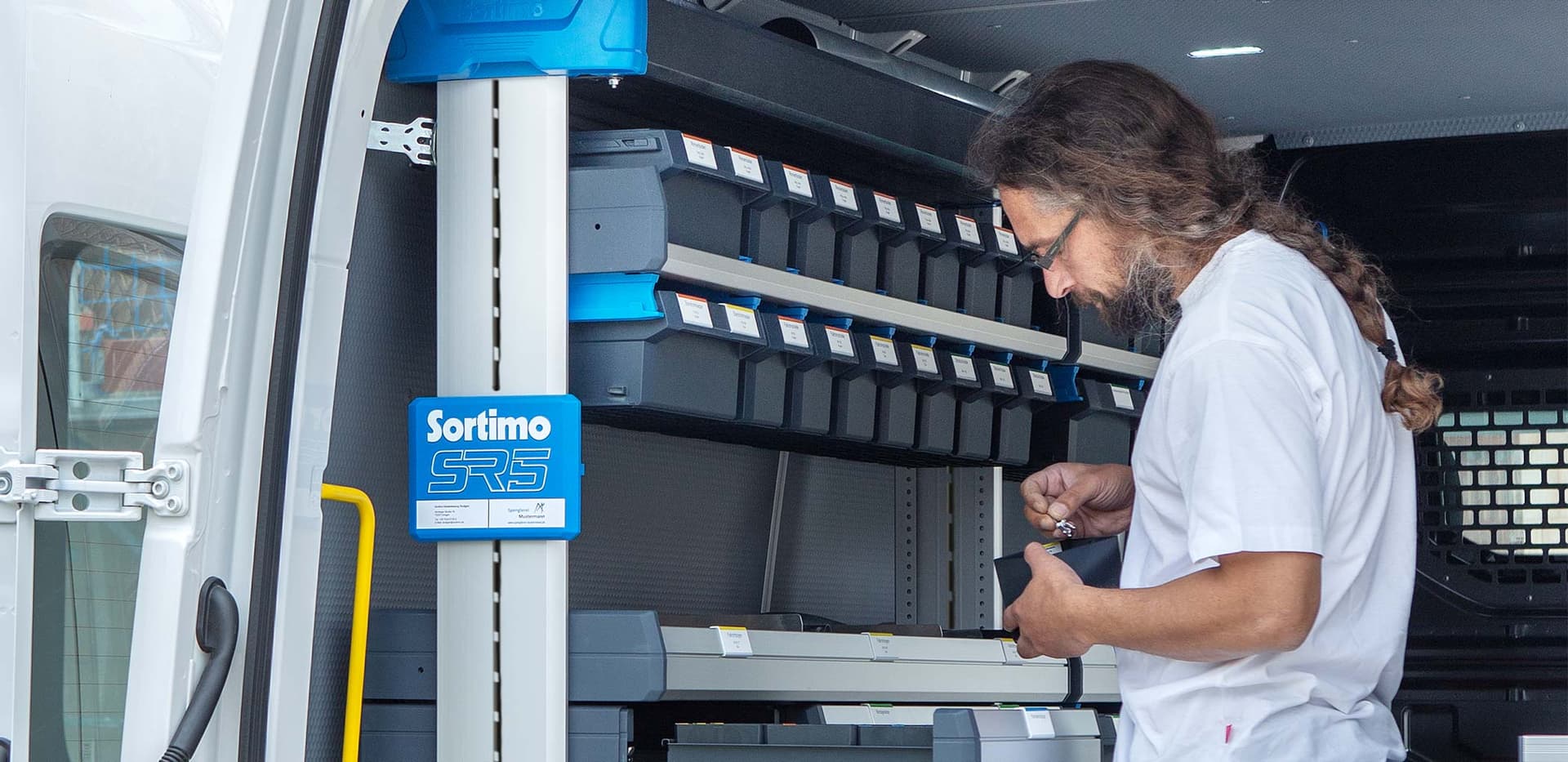
SR5 shelf with i-BOXX rack and drawers for terminals, boxes and switch ranges — sorted by range.
Passenger side
Case mounts for test and machine cases, with shelves above for lamps and consumables.
Rear & roof
Cable drum holder at the rear, long-goods tray for conduit and trunking in the roof area.
Floor
Load securing via ProSafe lashing points in the coated floor — also for loads taken on at short notice.
A large share of the more than 37,000 vehicles we have fitted out is on the road for electrical companies in the Ruhr region — from one-man businesses to whole fleets.
By company size
Which setup suits your business?
One-man business
A compact or medium panel van with a single SR5 shelf on the driver's side is usually enough. What matters is that installation material, test equipment and cordless tools are grouped on one side, so you can reach everything from the sliding door without walking round to the rear. The passenger side stays open for conduit, trunking and loads taken on at short notice.
Small company, 2 to 10 vehicles
As soon as several fitters share the same vehicles, a uniform compartment layout pays off: the same drawer division, the same labelling, the same position for the test cases. Anyone standing in for a colleague then finds their way without an introduction. We only plan differences where the job profiles genuinely differ — new build work versus service, for example.
Fleet of ten vehicles or more
Here it is the documented standard that counts. We define a reference specification with you, record it in a stocking list and build every new vehicle to match. That makes reordering Insetboxes easier, simplifies handovers when vehicles change and helps with costing, because the build is a known figure per vehicle.
Tools & material
What goes where
| Item | Where it goes |
|---|---|
| Cable drums, 25 m and 50 m | A rotating drum holder in the rear area, so cable can be paid out without unloading the drum. Two drums stand one above the other behind the bulkhead, saving space. |
| Installation tester and insulation tester | Padded case mount at hand height on the passenger side. Firmly latched, so impacts and constant vibration do not work through to the readings. |
| Terminals, boxes and Wago range | Shallow i-BOXX drawers with Insetboxes, one compartment per terminal size. Transparent lids make empty compartments visible while you are still loading. |
| Cable detector and tracing equipment | Its own low-dust place in a closed drawer, together with transmitter, receiver and spare batteries — not loose among the tools. |
| Switch ranges and cover frames | i-BOXXes separated by range, so frames and inserts do not get mixed up. Breakable covers lie flat rather than on edge. |
| Conduit, cable trunking, DIN rail | Long-goods tray in the roof area or a tube under the load space ceiling. That keeps the floor clear and stops the material from kinking. |
| Rotary hammer, core drill, breaker | Low down in L-BOXXes with machine inserts or in a heavy-duty tray. Low centre of gravity, back-friendly removal, core bits in the compartment above. |
| Batteries, chargers, on-board power | Fixed charging brackets instead of loose storage, fed from a fused on-board socket. That way the batteries are charged by the time you reach the next job. |
| Ladders and telescopic poles | Roof rack with ladder holder and ladder lift, so one person can load and unload alone. The load space stays free for shelving. |
| Distribution board material | T-BOXXes with visible stock for terminal blocks, marking material and miniature circuit breakers — you reorder before the compartment is empty. |
From practice
Typical planning mistakes
Small parts without a fixed compartment grid
Throwing terminals and boxes into collection boxes saves planning time once and loses it again every day in searching. A compartment grid with fixed allocation is what makes missing stock noticeable in the first place.
Test equipment on an open shelf
Testers on an open shelf travel along — until the first instrument falls off. Case mounts with padded inserts take up little space and prevent failures in the middle of a test.
Shelving on both sides up to the roof
A full build left and right looks tidy but uses up every reserve for conduit, trunking and bulky extra loads. Shelving on one side and an open area on the other is almost always the more practical division in electrical work.
Calculating payload only after the fit-out
Shelving, tools, cable drums and material add up faster than most people estimate. That calculation belongs before the order, not at the first roadside check.
Vehicle choice
Suitable vehicles for this trade
High-roof crew van
Typical models
VW Caddy Cargo, Ford Transit Connect, Renault Kangoo, Citroën Berlingo
Suitability
Well suited to pure service work. A narrow shelf on the driver's side and one case mount are enough; long goods only fit up to about two metres, and cable drums cost noticeable space.
Medium panel van
Typical models
VW Transporter, Ford Transit Custom, Mercedes Vito, Opel Vivaro
Suitability
The most common compromise in electrical work: shelving on one side, an open area opposite, a roof tray for conduit. Covers service work and smaller new build jobs equally well.
Large panel van
Typical models
Mercedes Sprinter, VW Crafter, Ford Transit, Fiat Ducato
Suitability
First choice when cable drums, drilling equipment and distribution board material all travel together. A build on both sides is justifiable here, because standing height and length leave reserves.
Electric van
Typical models
Ford E-Transit, Mercedes eSprinter, Renault Master E-Tech
Suitability
Feasible, but with a clear focus on weight. Lightweight shelving, reduced shelves and a deliberate axle load distribution are a planning requirement here, not an option.
Further reading
Why electrical vehicles are planned differently
Electrical work differs from other trades above all in the sheer number of item positions. A plumbing vehicle might carry sixty fitting variants; an electrical vehicle quickly runs to several hundred small parts — terminals, boxes, cable glands, switch ranges, circuit breakers. Volume is rarely the problem, allocation is. That is why planning starts not with the question of the largest shelf, but with the compartment grid.
The second difference is how sensitive the equipment is. Testers and measuring instruments stay with you for years and are calibrated regularly. Constant vibration and loose storage are the most common reason an instrument needs readjusting earlier than planned. A fixed, padded place is therefore not a comfort but a way of protecting value.
And third, long goods are almost always involved. Conduit, trunking and DIN rail determine the usable load space length. Storing them in the roof area or under the ceiling keeps the floor clear — the precondition for a material delivery at short notice still fitting in.
Service work and new build need different fit-outs
In service work, many short jobs a day determine how well the day is used. Every walk round to the rear costs seconds that add up over twenty appointments. We therefore put the most frequent items at hand height by the sliding door and push rarely used ones towards the back and the bottom. Which items those are can be derived from the job history — estimates, in our experience, tend to be wrong.
New build work looks different: a lot of similar material travels with you, cable and pipe in larger quantities, plus drilling and breaking equipment. The build can be narrower, the open area matters more, and load securing via ProSafe points in the floor carries more weight than in a service vehicle.
Companies doing both usually opt for a basic layout with interchangeable contents: the shelf frame stays, the BOXXes change with the type of job. That is considerably cheaper than two specialised vehicles and, in practice, surprisingly quick to change over.
What switching to electric vans changes
Electric vans arrive in electrical trades earlier than in many others — not least for the outward impression they make. Technically, that means one thing above all: the traction battery costs payload, and noticeably so. A full build that fitted the diesel version without difficulty quickly takes the same model as an EV to the limit of its permissible gross weight.
In those cases we plan lighter: SR5 in lightweight construction instead of a full build, fewer shelves, more flexible securing. Often the same contents can still be carried if they are sorted better rather than stored more generously. We plan the weight distribution across the axles at the same time, because on electric vehicles the reserve at the rear is smaller.
Frequently asked questions from Electrical
Advice for Electrical
Tell us about your vehicle and your working day — we will plan the conversion that suits your trade.
Also of interest