Industry solution · Customer service & maintenance
Van racking for service technicians
Many jobs a day, a wide range of parts, little time: in technical service the vehicle is the rolling spare parts store — and every search costs real money.
First-time fix
the right part is on board at the first appointment
Top 20
the most frequent parts sit at hand height by the sliding door
Numbered
Insetboxes labelled to match your stock logic
From everyday work
Typical challenges
Range of parts
Hundreds of spare parts have to be clearly sorted and traceable.
First-time fix
Only those carrying the right part solve the case at the first appointment.
Ergonomics
Getting in and out dozens of times — everything important belongs at hand height.
Proven in Customer service & maintenance
Our recommendation
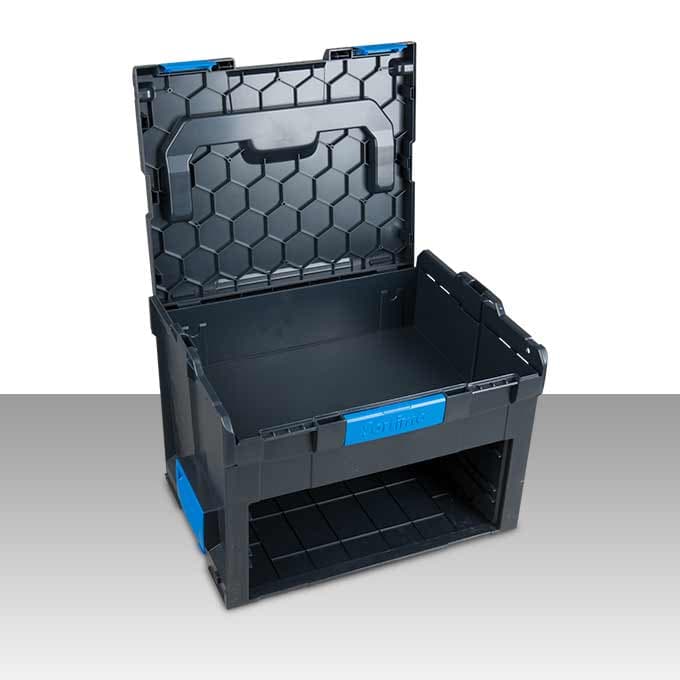
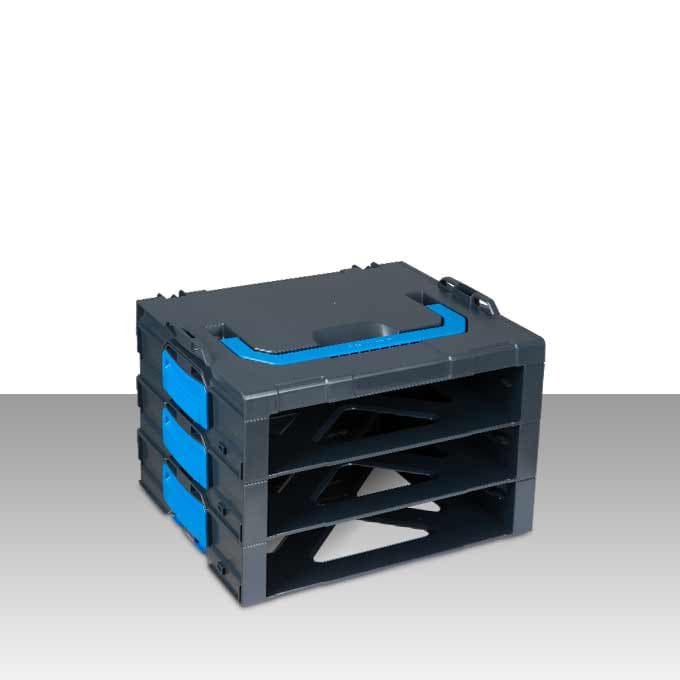
Shallow i-BOXX drawers with labelled Insetboxes mirror your parts store — numbered to match your stock logic on request. Frequently used items sit at hand height by the sliding door, measuring instruments in padded cases. That makes stocking controllable and raises the first-time fix rate.
Discuss the recommendation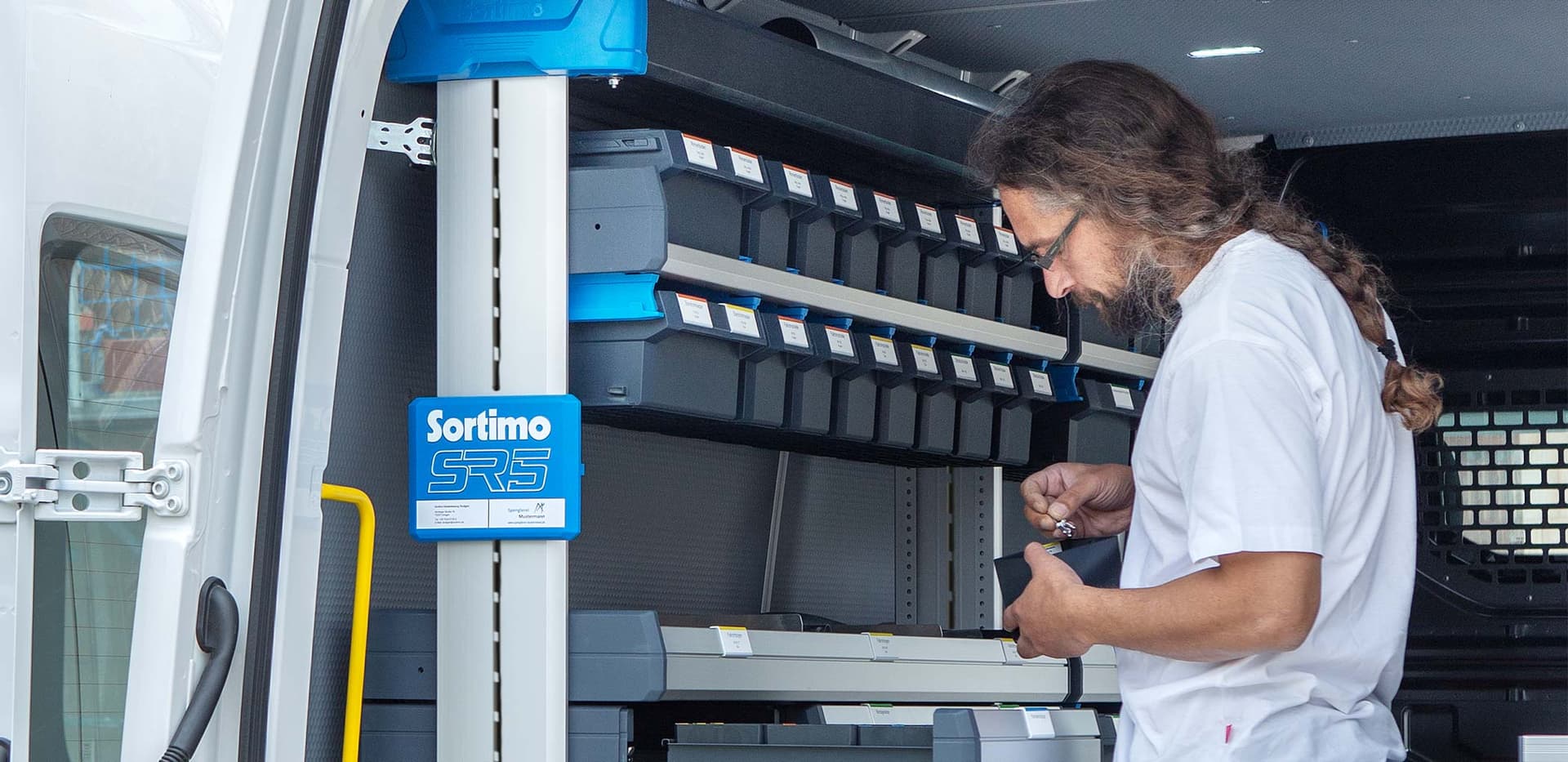

How it can look
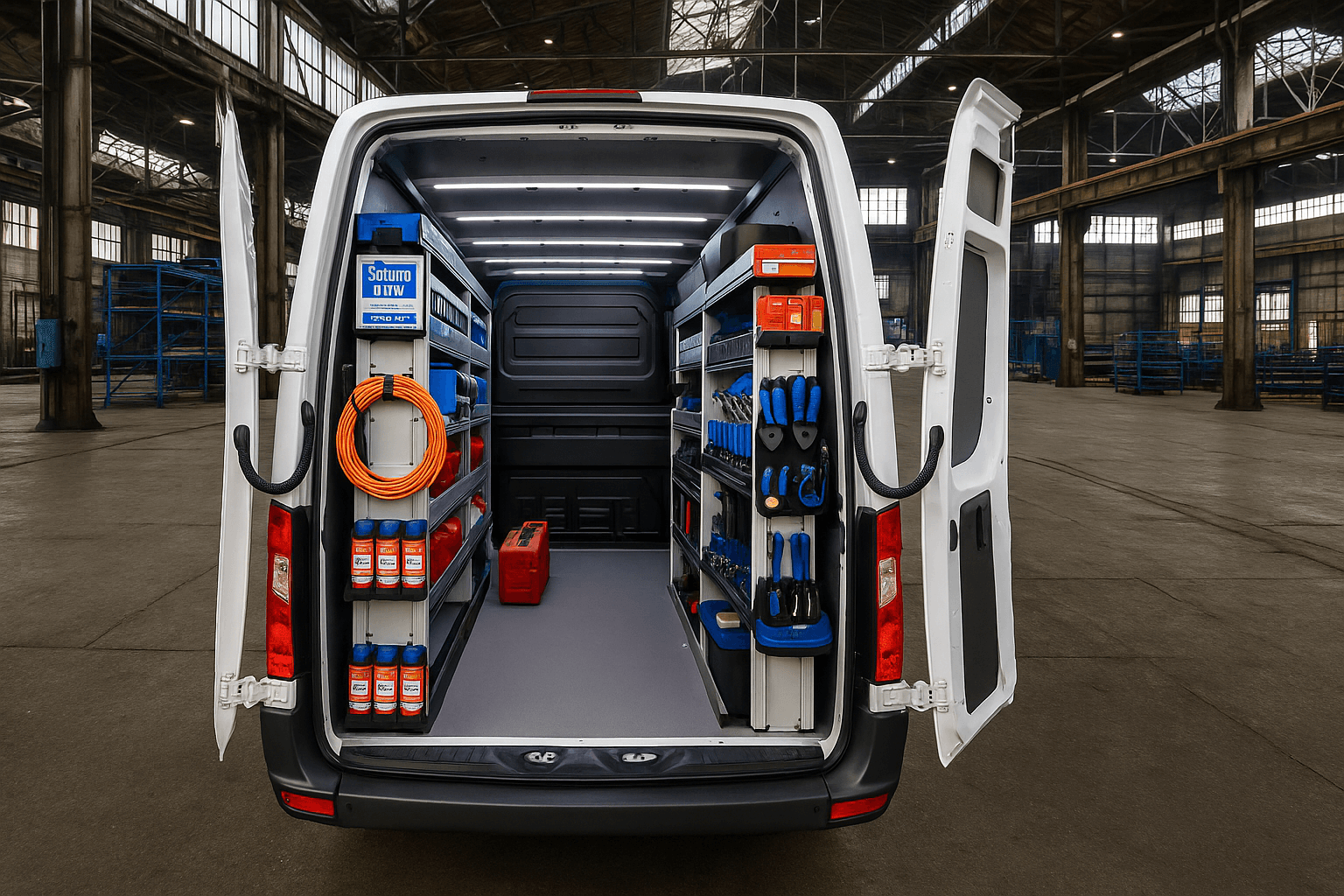
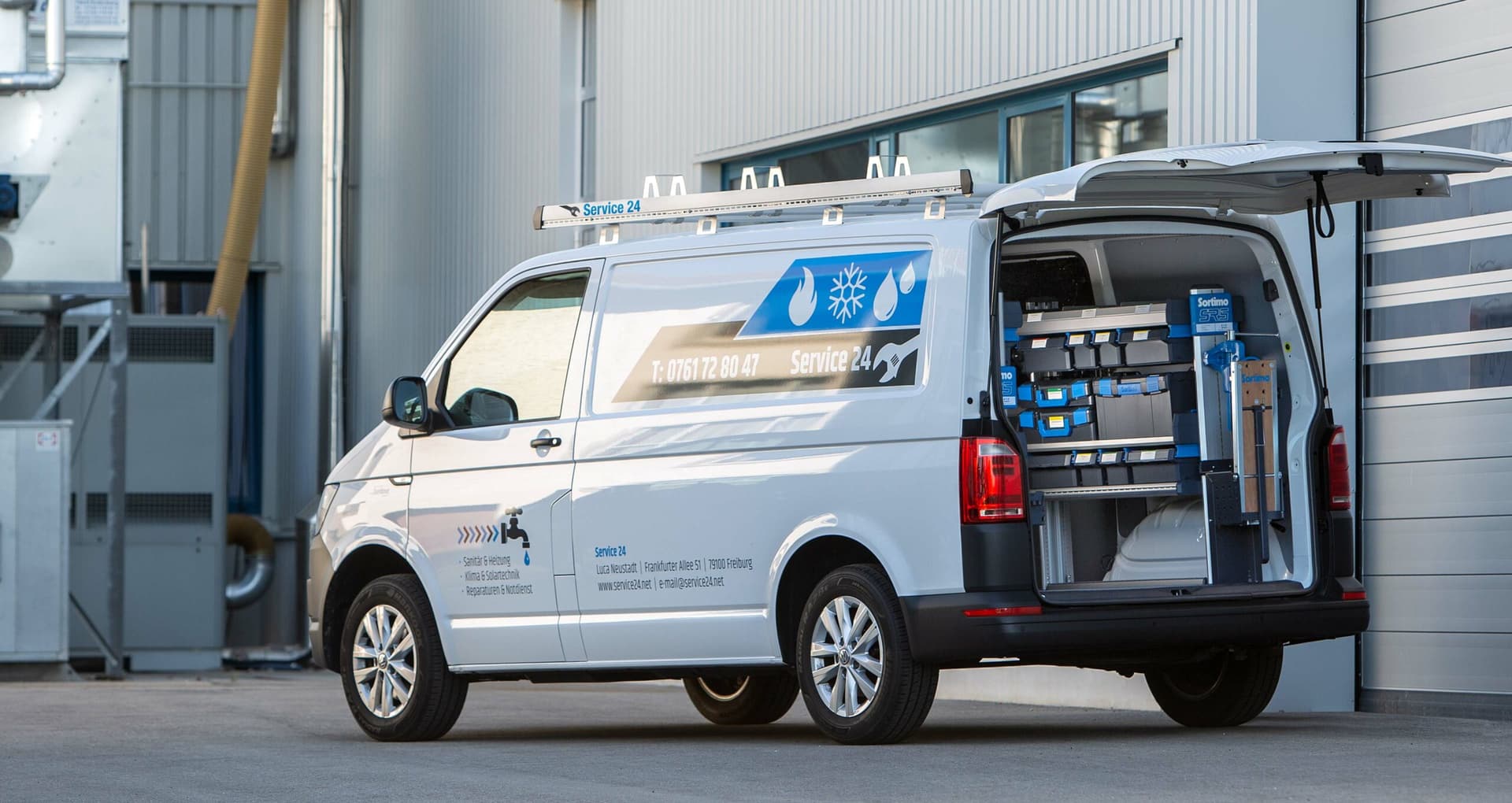
Typical build: Caddy/panel van for technical service
Parts store
i-BOXX racks with numbered Insetboxes mirror your spare parts store — matched to your stock management on request.
Sliding door
Quick-access shelf for the top 20 parts — no detour via the rear doors.
Test equipment
Case mounts for the measuring equipment, padded and shock-absorbing.
Equipment
Load space lighting and a 230 V socket for equipment checks right at the vehicle.
Service fleets run by manufacturers and maintenance providers are among our longest-standing customers — including standardised builds for new vehicles.
By company size
Which setup suits your business?
Single service technician
With one vehicle, the contents matter more than the build. We derive from your job history which parts were fitted how often over the last six months and align drawer division and Insetboxes accordingly. The rest is ergonomics: frequently used items by the sliding door, rare ones towards the back.
Small service team, 2 to 10 vehicles
As soon as several technicians are on the road, a uniform numbering logic becomes the core issue. If Insetbox 14 contains the same part in every vehicle, cover arrangements, material swaps between colleagues and restocking from the central store all work without queries. We align the labelling with your part number system.
Service fleet of ten vehicles or more
For manufacturers and maintenance providers we plan a documented fleet standard that can still be reproduced months later. New vehicles are built to the same stocking list, often timed to coincide with vehicle delivery. That considerably shortens the time from registration to the first job.
Tools & material
What goes where
| Item | Where it goes |
|---|---|
| Spare parts range, top positions | i-BOXX rack at hand height right by the sliding door, numbered Insetboxes following your part logic. No detour via the rear doors for the most frequent parts. |
| Spare parts range, slow movers | Lower and rearward drawers, the same numbering logic. Separating by turnover frequency saves measurable time over twenty jobs a day. |
| Diagnostic and measuring equipment | Padded case mount, firmly latched and shock-absorbing. Loose storage is the most common cause of damage to sensitive equipment. |
| Laptop, tablet, documentation | A secured mount in the cab or a shallow, lockable drawer. For use on the road we plan in a charging cable. |
| Cordless tools and charging equipment | Fixed charging brackets on a fused on-board socket. The batteries are full at the next job without having to be moved indoors in the evening. |
| 230 V supply for equipment checks | Inverter with a fused socket in the load space, output matched to your test and charging equipment. |
| Old parts and returns | A dedicated, clearly marked tray or box. Without separation, old parts get mixed in with saleable stock — the most common reason for stock discrepancies. |
| Consumables and small parts | Shallow i-BOXXes with transparent lids, seals, screws and fuses separated by size. Missing stock is noticeable as soon as you open them. |
| Hand tools for standard jobs | A compact tool case in a fixed position instead of spread across the shelving. One reach, one case, everything with you — that shortens every job. |
| Load space lighting | LED lighting in the load space, supplemented by a light at the rear door. On evening appointments, visibility determines access time. |
From practice
Typical planning mistakes
Stocking by gut feeling instead of data
The most common misjudgement in service work is which parts are really needed. A look at the job history of the last six months provides a sound basis — and almost always leads to a different division than the estimate.
Treating all parts the same
If slow movers get the same ease of access as the top positions, you give away the biggest time saving. Sorting by turnover frequency matters more than sorting by product group.
Keeping vehicle stock and store logic apart
If different designations apply in the vehicle than in the store, every restock becomes a translation exercise. Labelling Insetboxes to your part number system costs a little coordination once and permanently saves queries afterwards.
Overlooking payload on compact vehicles
Service vehicles are often high-roof crew vans with a tight payload. A dense spare parts store weighs more than it looks — that calculation belongs before the order, especially with electric vehicles.
Vehicle choice
Suitable vehicles for this trade
High-roof crew van
Typical models
VW Caddy Cargo, Renault Kangoo, Citroën Berlingo, Ford Transit Connect
Suitability
The classic in technical service: manoeuvrable, economical, easy to park. An i-BOXX rack plus case mount fits well; payload is the limiting factor.
Medium panel van
Typical models
VW Transporter, Ford Transit Custom, Mercedes Vito, Opel Vivaro
Suitability
Sensible when larger replacement units or a mobile working surface join the parts store. There is no standing height, but the vehicle stays handy in city traffic.
Large panel van
Typical models
Mercedes Sprinter, VW Crafter, Ford Transit
Suitability
For service technicians with a wide range of parts or bulky replacement units. Standing height makes working in the load space considerably easier when access is frequent.
Electric van
Typical models
Ford E-Transit Custom, Mercedes eVito, Renault Kangoo E-Tech
Suitability
Well suited to city service work with plannable rounds. The battery costs payload, so we plan the parts store better sorted rather than larger.
Further reading
First-time fix is a question of what you carry
The most important metric in technical service is the share of cases completed at the first appointment. Every second visit costs travel, an appointment slot and customer patience. What the racking can contribute is limited but very concrete: it makes the vehicle stock controllable.
Fixed positions and labelled compartments mean an empty compartment is noticed while loading — not at the customer's. Transparent lids and consistent allocation turn the visual check before setting off into a matter of minutes. Without that grid the vehicle stock remains an estimate, and estimates are the main reason for second visits.
The second lever is the selection itself. We derive the contents from the job history: which parts were fitted how often over the last six months, and which sat unused in the vehicle? The result regularly surprises companies — and almost always leads to a smaller but more accurate stock.
Ergonomics pays off across many jobs
A service technician with fifteen to twenty appointments a day gets in and out correspondingly often. Every walk from the cab through the rear to the rearmost drawer costs seconds, which add up to minutes over a day and to working days over a year.
That is why we plan service vehicles consistently by access frequency rather than by product group. The items needed daily sit at hand height right by the sliding door. What is needed less often moves down and back. Heavy items stay low down even if they are needed often — backs before seconds.
In many cases an additional narrow quick-access shelf at the sliding door is enough to implement this, without fundamentally changing the existing build.
The load space at the customer's
Unlike in construction or landscaping, the load space in service work regularly opens right in front of the customer — in the drive, in the underground car park, in the stairwell. What becomes visible then is part of how the company presents itself, intentionally or not.
A tidy load space with labelled compartments and clean surfaces comes across as unobtrusive but reliable. It signals that the technician knows where the parts are. Companies whose service business lives on repeat orders usually rate this point higher in hindsight than they would have before the fit-out.
Frequently asked questions from Customer service & maintenance
Advice for Customer service & maintenance
Tell us about your vehicle and your working day — we will plan the conversion that suits your trade.
Also of interest