Industry solution · Construction & site work
Van racking for construction companies
Rough conditions, heavy equipment and changing crews: site vehicles need robust racking that keeps order even under hard use.
Robust
heavy-duty shelves and modules for hard site use
Crews
labelled BOXXes make order transferable
Fleets
identical builds across many vehicles
From everyday work
Typical challenges
Hard use
Dust, impacts and weather put material and workmanship to the test.
Heavy equipment
Breakers, cut-off saws and compactors have to be stored safely and stay accessible.
Changing users
Different crews share the same vehicle — the order has to be self-explanatory.
Proven in Construction & site work
Our recommendation
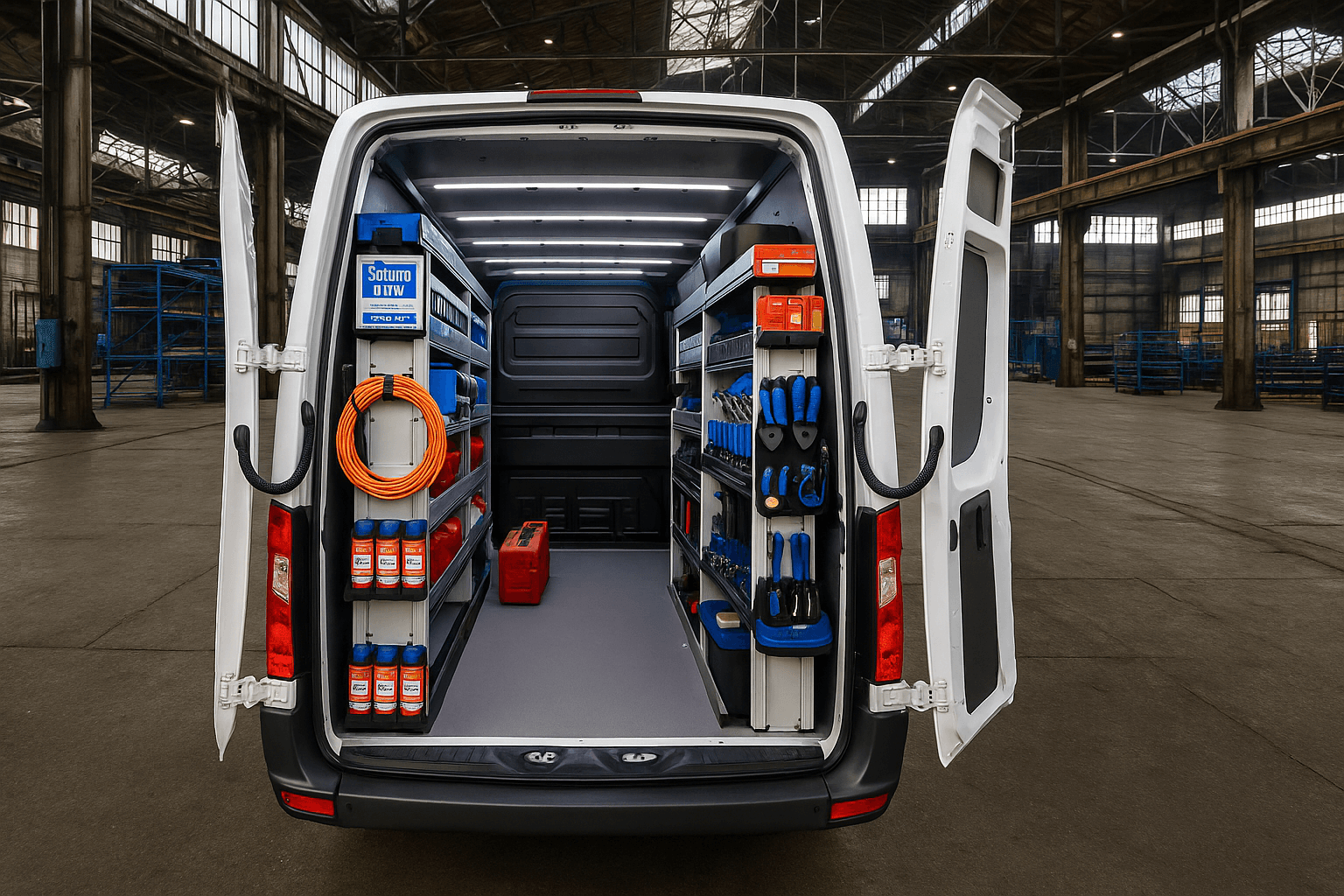
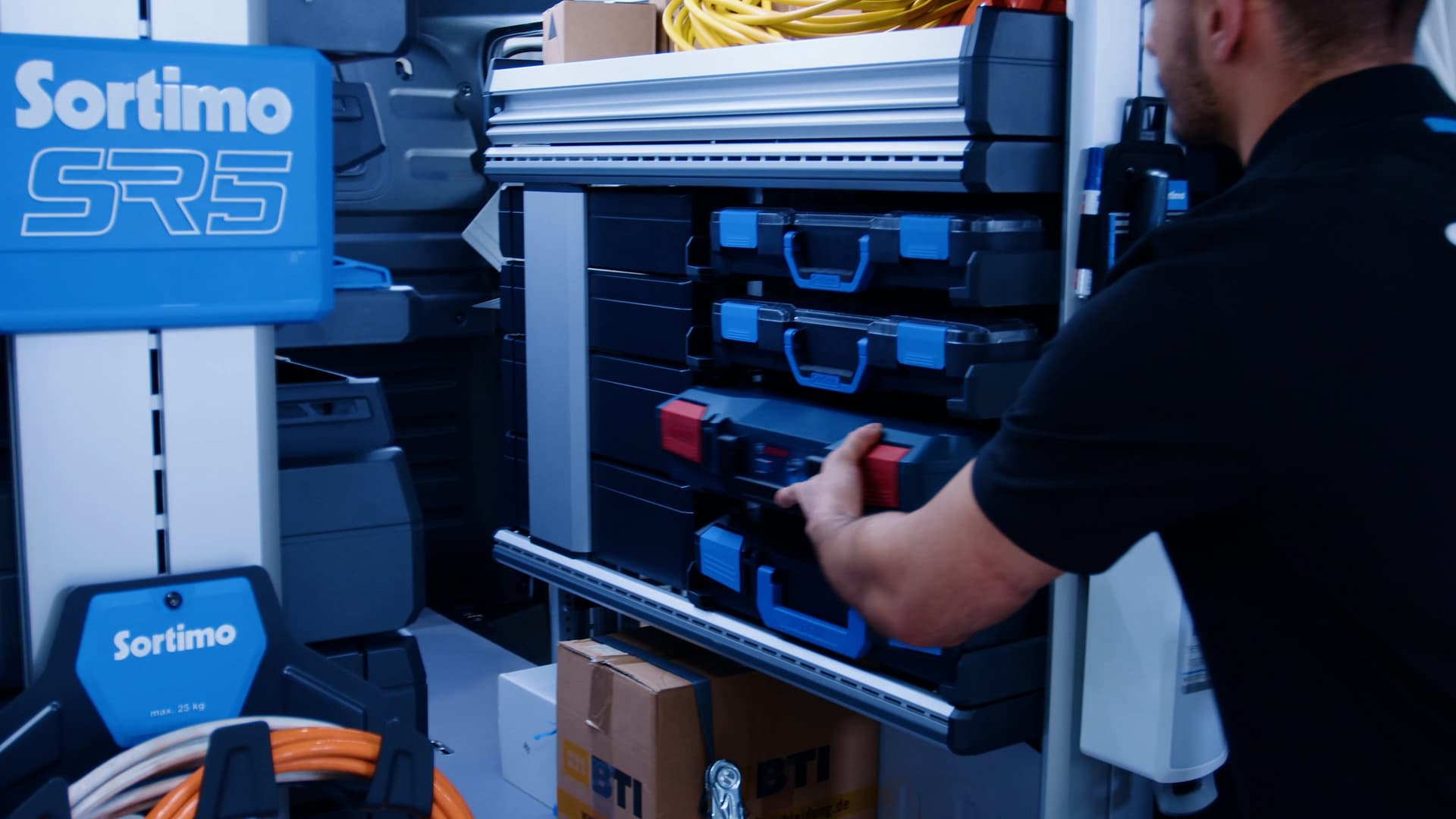
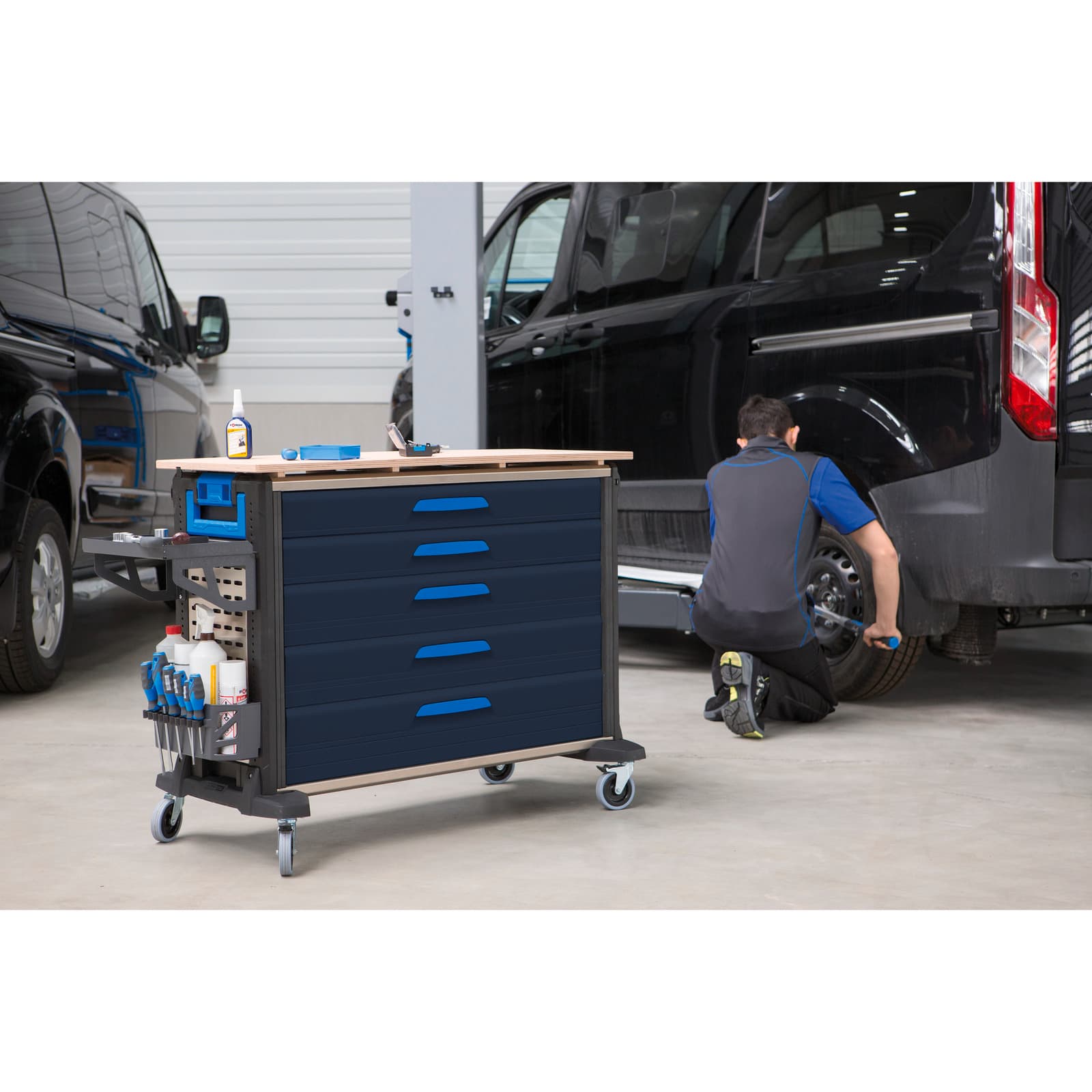
Robust SR5 modules with heavy-duty shelves carry machines low down, labelled BOXXes make the order comprehensible for every crew. The WorkMo brings the workplace to the site, ProSafe secures heavy loads to standard.
Discuss the recommendation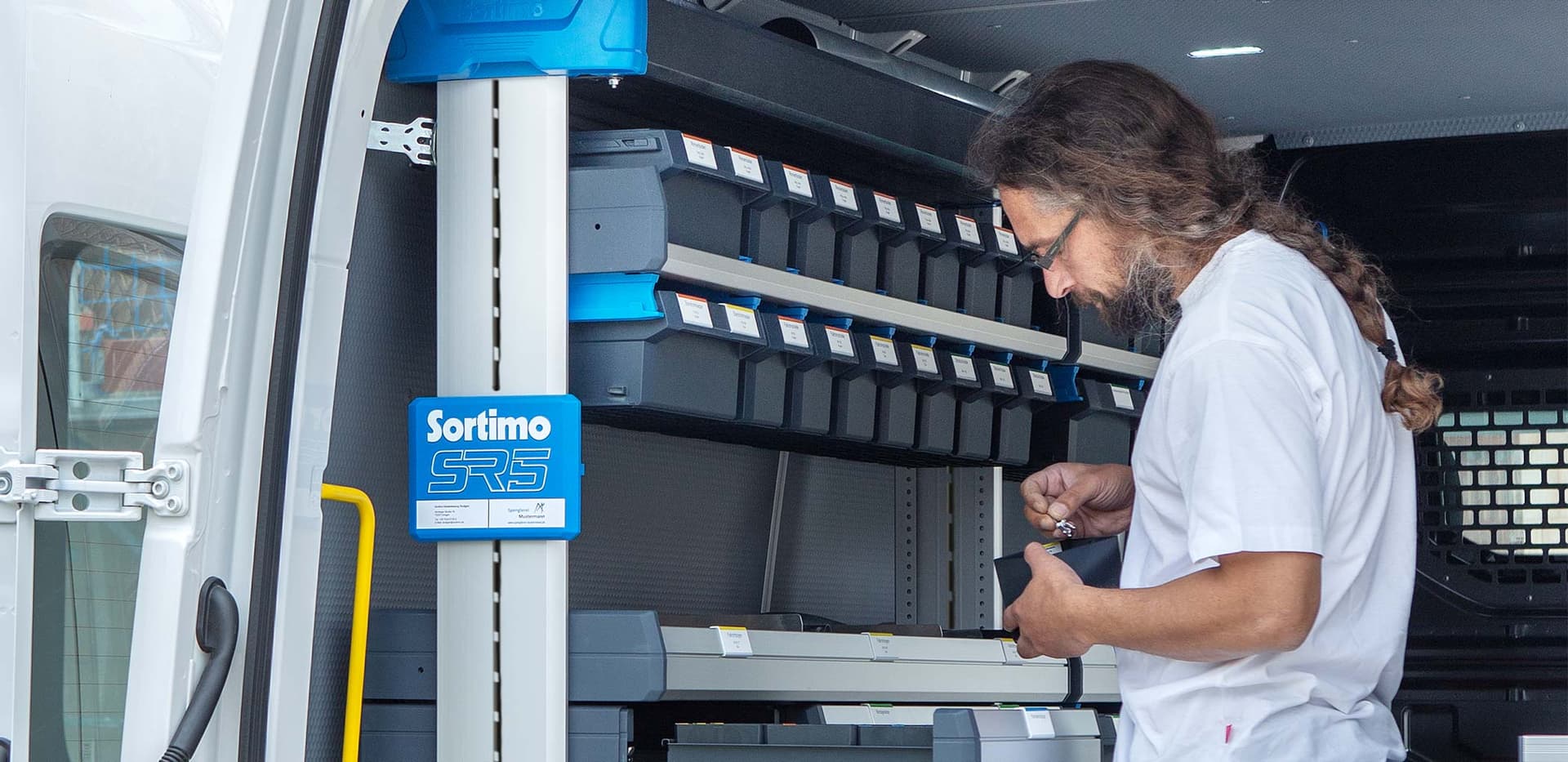
How it can look
Typical build: dropside/box body for structural work
Underfloor
Lockable underfloor boxes for tool cases and small material — theft-protected even on an open dropside.
Machine storage
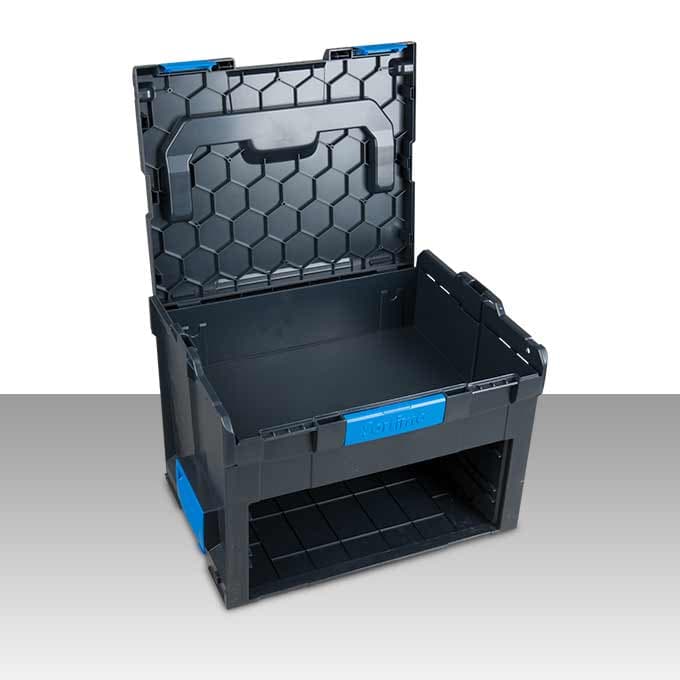
Breakers, cut-off saws and the like in L-BOXXes with inserts — every machine has its place.
Load bed
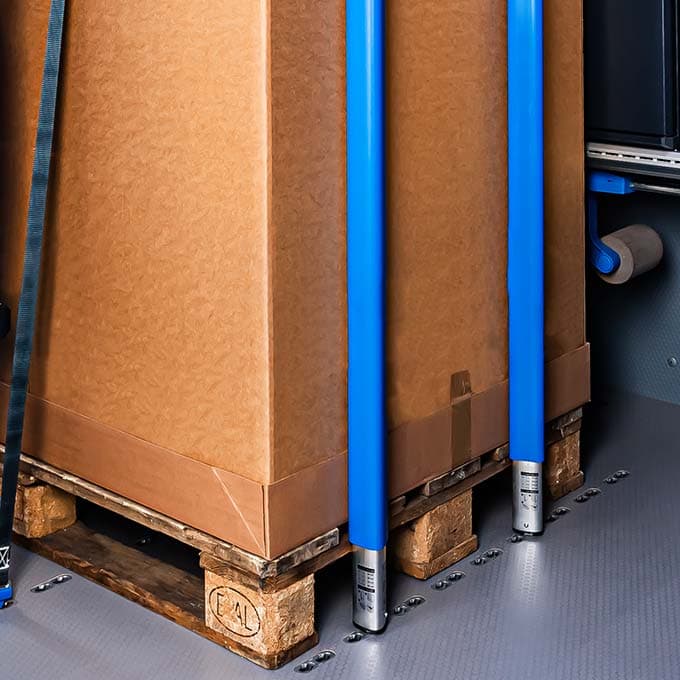
Lashing rails all round for formwork and scaffolding parts, non-slip surfacing against shifting loads.
For construction companies we regularly fit out entire fleets to one standard — including a labelling scheme for the crews.
By company size
Which setup suits your business?
One-man business
For refurbishment, conversion work and smaller structural jobs a robust basic build is enough: a heavy-duty tray for breaking and drilling equipment, one shelf for BOXXes, lashing rails all round. What matters is that everything is lockable — on site the vehicle is often left unattended for hours.
Small company, 2 to 10 vehicles
As soon as crews change, labelling becomes more important than equipment. The same BOXX positions, the same colour codes and the same labelling in every vehicle mean that any employee finds their way in any vehicle. We recommend a simple, consistently maintained labelling scheme rather than elaborate special solutions.
Fleet of ten vehicles or more
In construction companies with many vehicles it is about series builds and documentation. We build identically, record the layout in writing and can retrofit or replace years later without a single vehicle falling out of line. That also makes tool management easier, because every vehicle has the same target stock.
Tools & material
What goes where
| Item | Where it goes |
|---|---|
| Breakers and demolition hammers | Low down in a heavy-duty tray or an L-BOXX with a machine insert. Chisels lie in the compartment above, so equipment and tooling stay together. |
| Cut-off saws and cutting discs | The machine in a closed BOXX, discs upright in a divided compartment. Loosely stacked discs regularly break on the site access road. |
| Rotating laser and level | Padded case mount in a low-dust, lockable area. Surveying equipment copes badly with site dust and loose storage. |
| Rotary hammer with core bits | Heavy-duty tray low down, core bits in a compartment with dividers. Wet bits go into the area that can be hosed out, not into closed shelving. |
| Formwork, shuttering panels, timbers | On the load bed with lashing rails all round and tensioning bars, form-fit against the bulkhead — not loosely stacked. |
| Reinforcing steel and long goods | Long-goods tubes under the load bed for shorter bars; longer material with edge protection and securing towards the front on the dropside. |
| Compactor and wacker plate | A low position with lashing points, centre of gravity low. Fuels and oils separately in a compartment with a collecting rim, tightly sealed. |
| Tool cases and hand tools | Lockable underfloor box or roller shutter cabinet. Even on an open dropside the tools stay dry and secured. |
| Consumables and fixing material | Labelled BOXXes with fixed positions: plugs, anchors and screws by size. Crew changes only work with unambiguous labelling. |
| Core samples, stone, rubble | Closed trays or mesh boxes with lashing points. Loose stones are one of the greatest risks in a construction vehicle under emergency braking. |
From practice
Typical planning mistakes
Planning order but not labelling it
A well thought-out build without labelling lasts exactly as long as the same employee drives the vehicle. With changing crews, labelling is the decisive part of the concept, not the accessories.
Surveying equipment in the dusty area
Rotating lasers and levels often sit next to the breaker in a construction vehicle. Dust, impacts and moisture then cost calibration and service life. A separate, closed area is the cheaper route.
Formwork without form-fit securing
Loosely stacked shuttering panels are among the most common securing defects found at roadside checks — and among the most dangerous. Lashing rails, tensioning bars and non-slip surfacing solve that with little effort.
Thinking about theft protection only after the damage
Construction vehicles often stand overnight on open sites. Anyone who only considers lockable boxes after the first break-in has chosen the more expensive route. Out of sight and locked is the most effective combination.
Vehicle choice
Suitable vehicles for this trade
Panel van, long wheelbase
Typical models
Mercedes Sprinter, VW Crafter, Ford Transit, Fiat Ducato
Suitability
The most practical choice for interior fit-out and refurbishment. Tools stay dry and locked away, lashing rails secure material on the remaining area.
Dropside, single or double cab
Typical models
Sprinter dropside, Iveco Daily, Ford Transit dropside, VW Crafter dropside
Suitability
First choice for formwork, stone and bulk material. Tools travel in lockable underfloor boxes and the double cab takes the crew along.
Box body
Typical models
Sprinter box body, Iveco Daily box body, MAN TGE box body
Suitability
The compromise for plenty of tools plus weather-sensitive material. Rectangular interior, often with a tail lift for heavy machines.
Tipper
Typical models
Sprinter tipper, Iveco Daily tipper
Suitability
Indispensable for demolition and earthworks, unsuitable for carrying tools. The tool requirement here is covered by underfloor boxes or a second vehicle.
Further reading
Order that survives a change of crew
Site vehicles are rarely driven by one person only. Crews change, temporary staff step in, vehicles are swapped between sites. An order that only the regular driver understands is therefore no longer an order after a short time.
What does work is a simple, consistently maintained labelling scheme: labelled BOXXes, fixed positions, the same layout in every vehicle. Whoever takes over finds their way without an introduction and automatically puts things back correctly when unloading. Consistency matters more than effort — three clearly separated categories that everyone understands beat fifteen compartments that nobody maintains.
From more than 37,000 vehicles fitted out we know: systems almost never fail because of the hardware, but because the allocation was not self-explanatory.
What hard site use demands from the racking
Construction vehicles drive over unmade access roads, stand in dust and are loaded in all weathers. The stress on the racking is therefore different than in a service vehicle: constant vibration, impacts during loading, moisture and abrasive dust in every compartment.
What matters above all is the bolting. The shelf modules themselves are designed for hard use; damage typically occurs where fixings were made at points not intended for them, or where loose cargo strikes a module repeatedly. We bolt exclusively to the mounting points provided by the vehicle manufacturer — which is at the same time the precondition for individual type approval not being required.
For the interior, the combination of coated floors, open trays for the rough items and closed drawers for sensitive tools has proven itself. The load space can then be swept and washed out instead of becoming permanently grubby.
Dropside, box body or panel van
The choice of vehicle in construction depends less on the tools than on the material. Anyone regularly transporting formwork, stone or bulk material needs a dropside — and solves the tool question with lockable underfloor boxes that stay dry and secured while the load bed stays clear.
The box body is the compromise for companies carrying a lot of tools and weather-sensitive material. The panel van remains the choice for interior fit-out, refurbishment and all trades where material transport is manageable. In practice, larger construction companies almost always run a mixture — with one uniform tool standard across all body types.
Frequently asked questions from Construction & site work
Advice for Construction & site work
Tell us about your vehicle and your working day — we will plan the conversion that suits your trade.
Also of interest