Industry solution · Landscaping & groundworks
Van racking for landscaping companies
Soil, water, tools and machines in one vehicle: landscaping calls for racking that tolerates dirt and transports heavy equipment safely.
Washable
floors and trays cope with soil and wet
Leak-proof
petrol equipment and canisters in dedicated holders
Separated
fuels and oils stored sealed and away from the tools
From everyday work
Typical challenges
Dirt & moisture
Wet tools and soil take their toll on any ordinary racking.
Petrol equipment
Saws, brushcutters and hedge trimmers need secure, ventilated holders.
Fuels and oils
Fuel and oils have to be stored sealed and away from the tools.
Proven in Landscaping & groundworks
Our recommendation
Coated, washable floors and open trays make the racking dirt-tolerant. Equipment holders fix petrol machines leak-proof, canisters stand in their own compartments with a collecting rim. Lashing rails secure wheelbarrows and large equipment on the remaining area.
Discuss the recommendation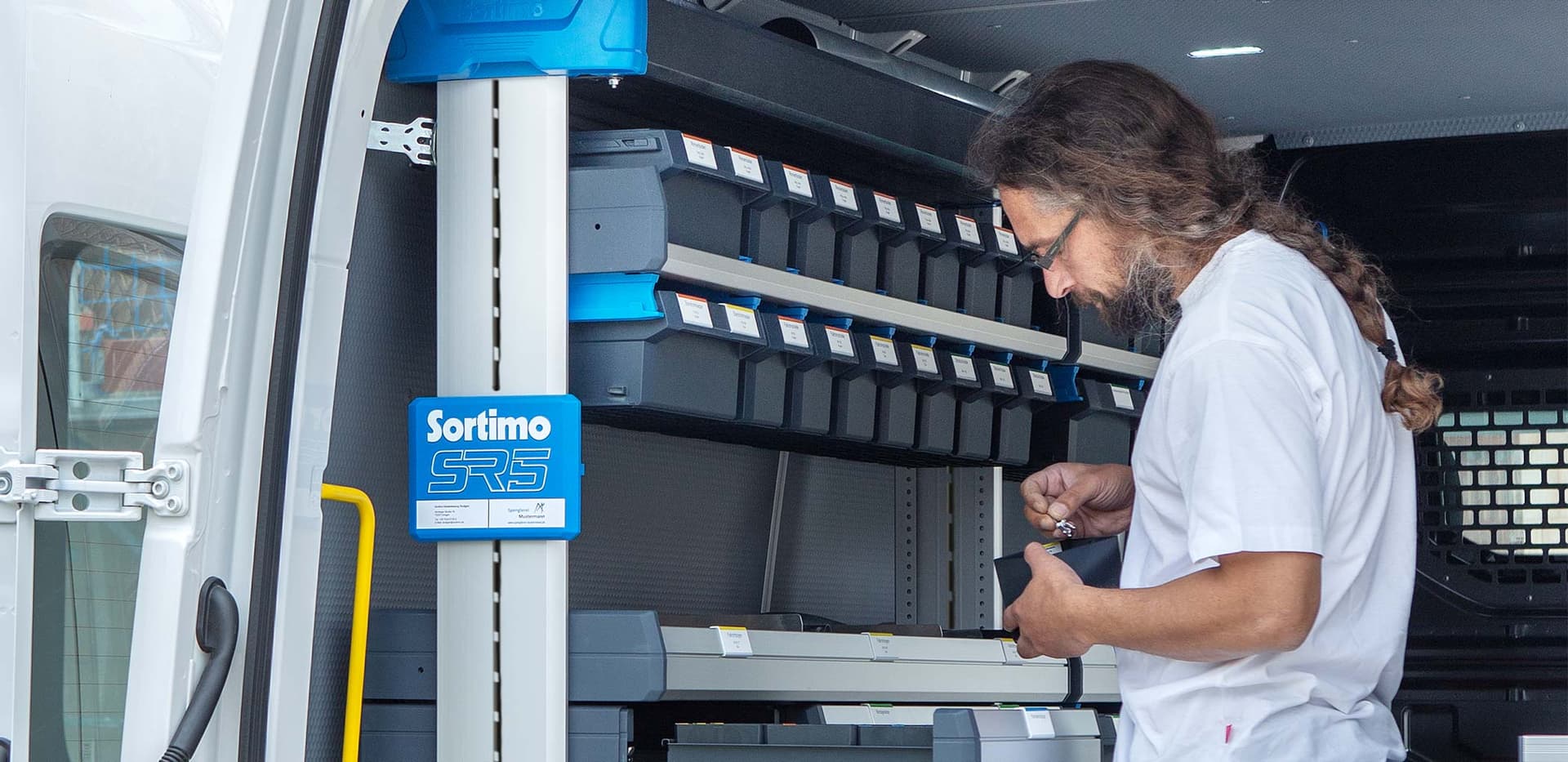
How it can look
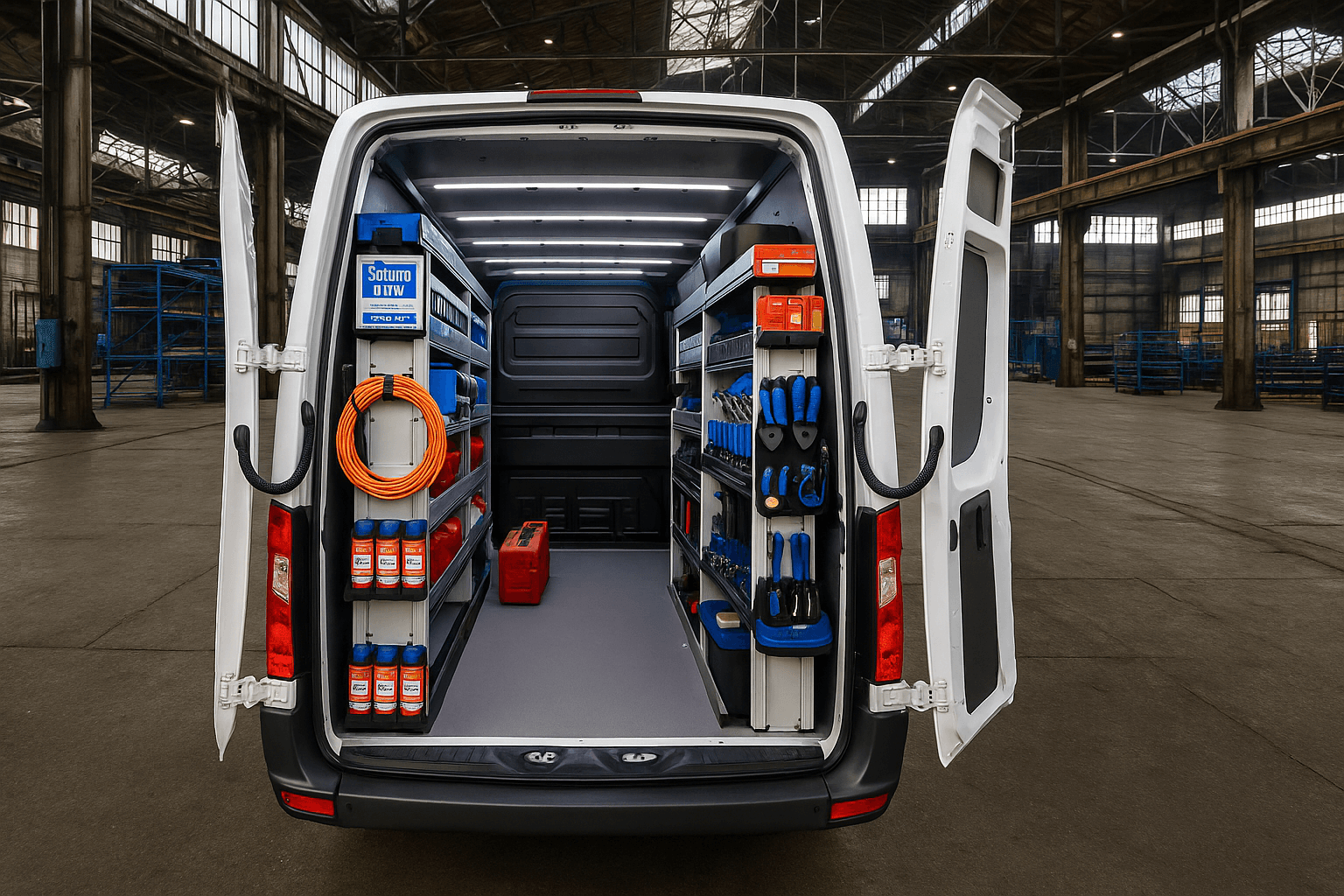
Typical build: dropside with tool box body
Equipment compartment
Lockable area with holders for saw, brushcutter and hedge trimmer — ventilated and leak-proof.
Canister compartment
Fuel and oils in dedicated compartments with a collecting rim — cleanly separated from the tools.
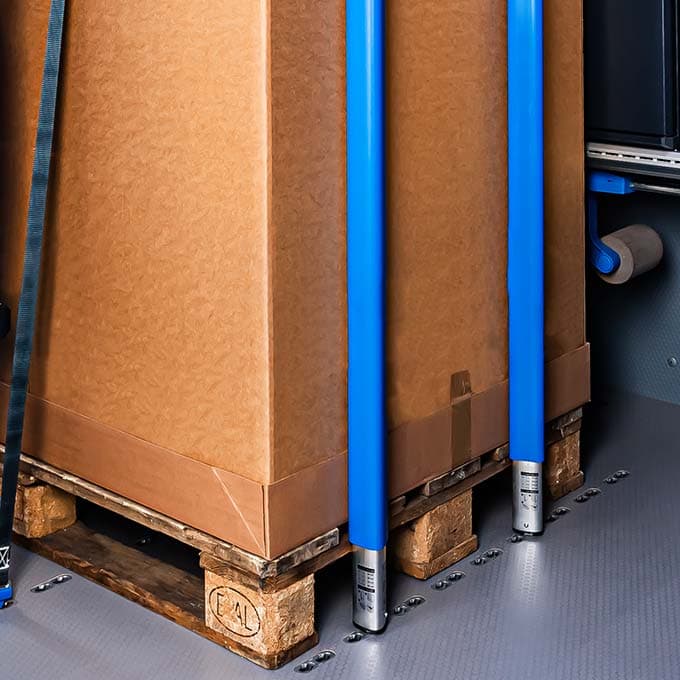
Load bed
Lashing rails and nets for wheelbarrow, plants and large equipment.
Landscaping companies particularly value our robust floor and holder solutions — matched to hard everyday use.
By company size
Which setup suits your business?
One-man business
For maintenance and smaller garden work, a dropside with a lockable tool box body or underfloor boxes is usually enough. The load bed stays clear for green waste, soil and plants, and the tools travel dry and secured. Petrol equipment belongs in fixed holders even then — not loose in the corner.
Small company, 2 to 10 vehicles
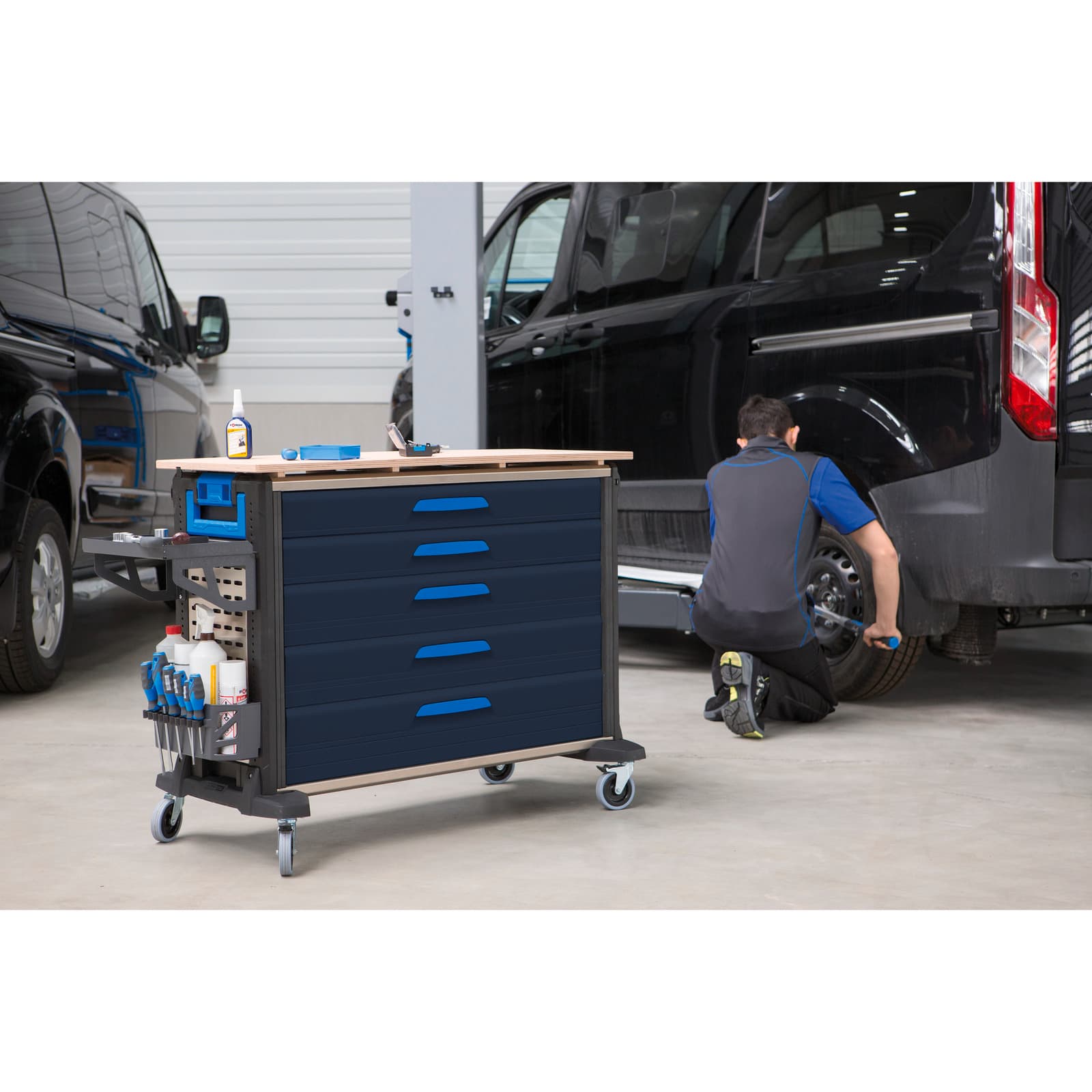
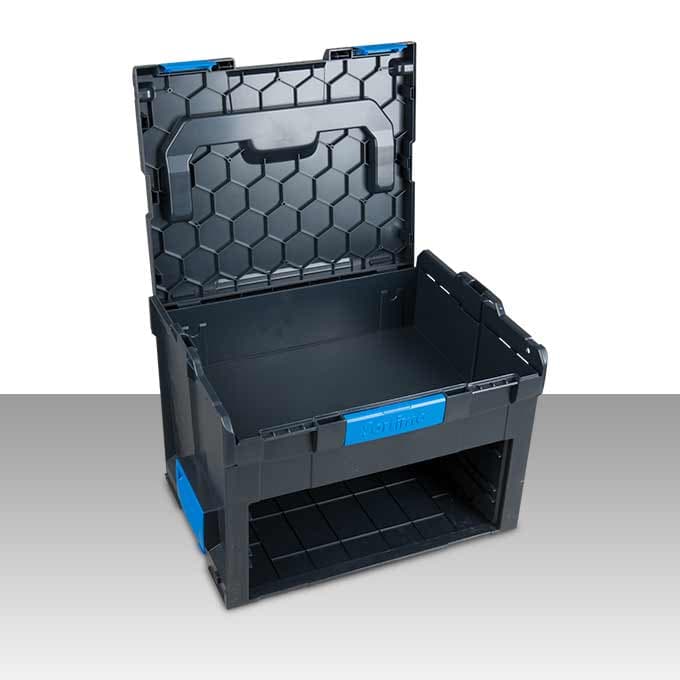
A division by task is typical: maintenance vehicles with petrol equipment holders and a canister compartment, construction vehicles with a towbar for compactors and mini excavators. Uniform BOXX formats across all vehicles mean hand tools can move between crews.
Fleet of ten vehicles or more
In larger landscaping companies, seasonal changeover plays the main role. We plan the basic build so that winter service equipment and maintenance machinery use the same mounts. The contents then change twice a year while the build stays untouched — that saves time and avoids drilling into the vehicle.
Tools & material
What goes where
| Item | Where it goes |
|---|---|
| Chainsaw and spare chains | An equipment holder that fixes the saw and keeps chain oil out of the load space. Guide bar, chains and files are stored separately in a closed drawer. |
| Brushcutter and strimmer | Wall bracket with lengthwise fixing, so the cutting tool cannot swing about. Spare line spools and blades in the compartment below. |
| Hedge trimmer and telescopic hedge trimmer | Holder with blade guard on the side wall. Telescopic units lie lengthwise under the ceiling so the floor area stays clear. |
| Petrol, two-stroke mix, chain oil | A dedicated compartment with a collecting rim, tightly sealed and ventilated, clearly separated from the tools and labelled. |
| Leaf blower and cordless equipment | Fixed brackets instead of loose storage, batteries and chargers in closed BOXXes. Charging on the road via a fused on-board socket. |
| Hand tools: spade, rake, hoe | A vertical handle holder on the side wall or in the equipment compartment. Lying flat, handles block half the load bed and wander under braking. |
| Wheelbarrow and large equipment | Form-fit against the bulkhead using lashing rails, nets and straps. With wacker plates, a low position helps keep the centre of gravity down. |
| Plants, substrate, bags of soil | Separate trays or mesh boxes with lashing points, set apart from the tool area. Non-slip floors keep pots and bags in place. |
| Water canisters and watering equipment | A tray with a collecting rim and lashing points, planned low down and close to the axle. Water is heavy and moves in bends if it is not fixed. |
| Wet tools after the job | A dedicated open area that can be hosed out, away from the closed compartments. Dry and wet belong strictly separated in landscaping. |
From practice
Typical planning mistakes
Wet and dry tools in one zone
Putting muddy hand tools into the same compartments as cordless equipment and measuring instruments shortens their life considerably. Two separate areas — open trays that can be hosed out and closed drawers — are the single most effective lever in a landscaping vehicle.
Fuels and oils next to the tools
Petrol, two-stroke mix and chain oil reliably leak at some point. Without a dedicated compartment with a collecting rim and ventilation, that spreads across half the load space and makes the vehicle unpleasant for weeks.
Transporting petrol equipment loose
An unsecured chainsaw is a serious risk under emergency braking and damages both itself and its surroundings on every journey. Equipment holders take up little space and solve both problems at once.
Overestimating payload with bulk material
Soil, gravel and planting substrate use up the payload faster than any tools. A heavy full build is therefore rarely sensible in landscaping — planning lean and keeping area free beats maximum storage.
Vehicle choice
Suitable vehicles for this trade
Dropside with double cab
Typical models
Sprinter dropside double cab, Iveco Daily double cab, Ford Transit double cab
Suitability
The standard in landscaping: crew in front, material behind, tools in lockable underfloor boxes. The load bed stays clear for green waste and bulk material.
Panel van
Typical models
VW Transporter, Mercedes Vito, Ford Transit Custom, Renault Trafic
Suitability
Sensible for maintenance rounds with a lot of petrol equipment and little bulk material. The closed load space protects equipment from weather and theft but demands consistent dirt separation.
Tipper
Typical models
Sprinter tipper, Iveco Daily tipper, VW Crafter tipper
Suitability
The clear choice for earthworks and removing spoil and green waste. Tools and petrol equipment travel in underfloor boxes or a separate equipment compartment.
Towing vehicle with trailer
Typical models
Dropside or panel van with machine or tipping trailer
Suitability
Practical where equipment needs vary. We plan the weight distribution with an eye on nose weight and keep rear access clear so the trailer can stay coupled.
Further reading
Dirt is the constant in landscaping
Unlike in almost every other trade, dirt in landscaping and groundworks is not an incident but the normal state. Soil, wet, green waste and grit come into the vehicle on every job. Racking that fights against that loses; racking that expects it works for years.
In practice that means coated, washable floor panels and open trays that can be hosed down and left to dry. Closed, hard-to-reach compartments are the wrong choice in the dirty area — things collect there that nobody gets out again. Conversely, cordless tools, charging equipment and sensitive measuring instruments belong in a strictly separated, closed area.
This zone separation is the most important planning step. Making it too small is the most common mistake: once the dirty zone is full, the wet equipment ends up in the clean area and the separation is void.
Think petrol equipment and fuels together
Chainsaw, brushcutter and hedge trimmer have two properties that make them problematic in a vehicle: sharp cutting tools and fuels that can leak. Both argue for fixed equipment holders rather than storage on a shelf — the machines are fixed, chain oil stays under control, and nothing swings about under braking.
Fuel and oil belong in a dedicated compartment with a collecting rim, tightly sealed and ventilated, clearly labelled and separated from the tools. The area should be near the rear door so canisters do not have to be carried through half the load space, and not in the immediate vicinity of batteries and chargers.
Switching to cordless equipment shifts the problem: instead of fuel you then need charging brackets and a fused on-board power supply, so the batteries can be recharged between jobs. The space requirement moves but does not disappear.
Season, trailers and weight distribution
Landscaping vehicles work very differently over the year: planting in spring, maintenance in summer, leaves in autumn, winter service in the cold season. A build optimised for one season does not suit the other three. That is why we plan modular — the same mounts, changing contents.
The second constant is trailer operation. Compactors, mini excavators, chippers and green waste usually travel on the trailer, which brings nose weight and axle loads into the planning. Heavy equipment belongs between the axles as far as possible, and frequently used tools have to stay reachable from the rear without uncoupling the trailer — a detail that costs time every day if it is overlooked.
Frequently asked questions from Landscaping & groundworks
Advice for Landscaping & groundworks
Tell us about your vehicle and your working day — we will plan the conversion that suits your trade.
Also of interest